Future-Proof Skills for the AI Era: 6 That Get More Valuable as AI Improves (2026)
'Learn AI' is generic advice. The skills that actually compound as AI improves aren't prompts — they're six capabilities you can start this weekend: running agents, building distribution, building hardware, curating with a real point of view, shipping-and-selling as one person, and pulling people into real rooms. Pick one and get dangerous; pick three and you're the person every team wants.
The framework here is Greg Isenberg's six skills for the agentic era; this is the maker's cut — reframed for someone who vibe-codes products and needs to get them used. Each skill comes with the smallest first rep and a link to the guide that goes deep. You don't need all six. Get genuinely good at one.
Why is 'learn AI' bad advice?
'Learn AI' is like 'learn computers' in 1995 — true, useless, and already what everyone's doing. As AI does more of the building, value moves to the things it can't hand you: judgment, taste, distribution, real-world reach, and the ability to combine them. Those are skills, and they get more valuable as the models get better, not less.
Below are six. They're not ranked, and you don't need all of them — pick one and get genuinely good; pick three and you become the rare person who can take an idea from nothing to in-market alone.
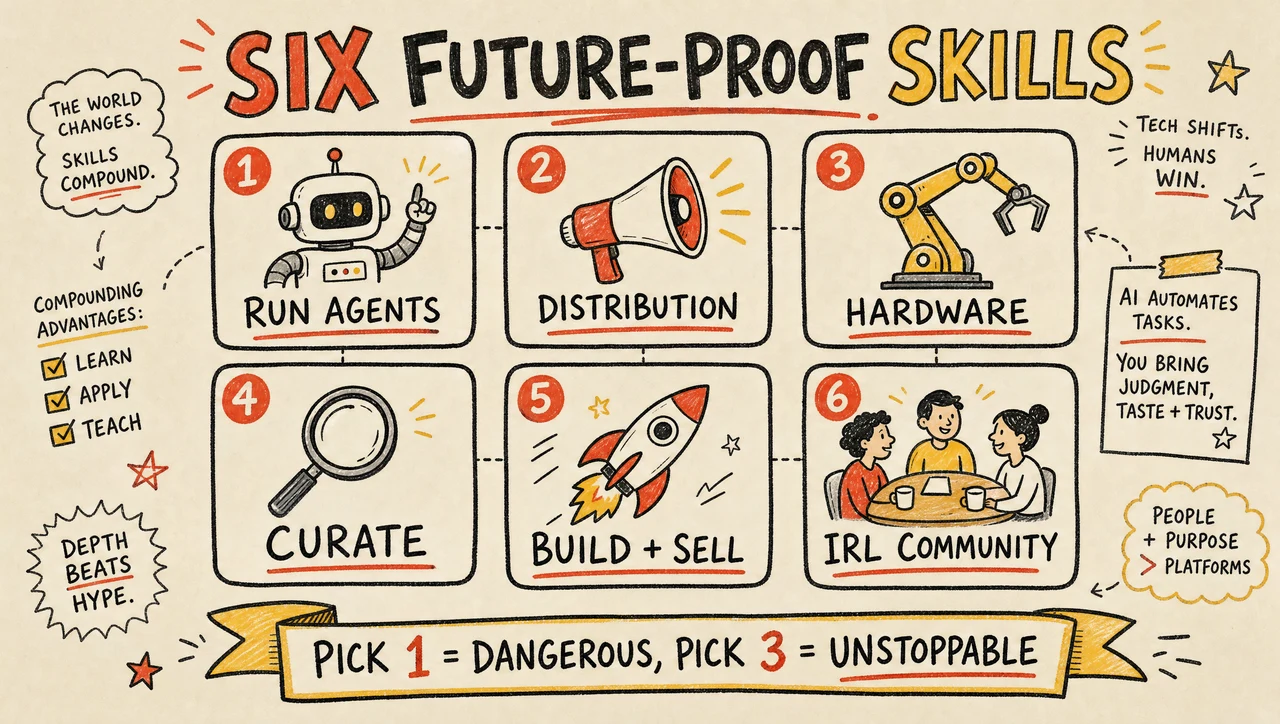
Skill 1 — Run agents, not just prompts
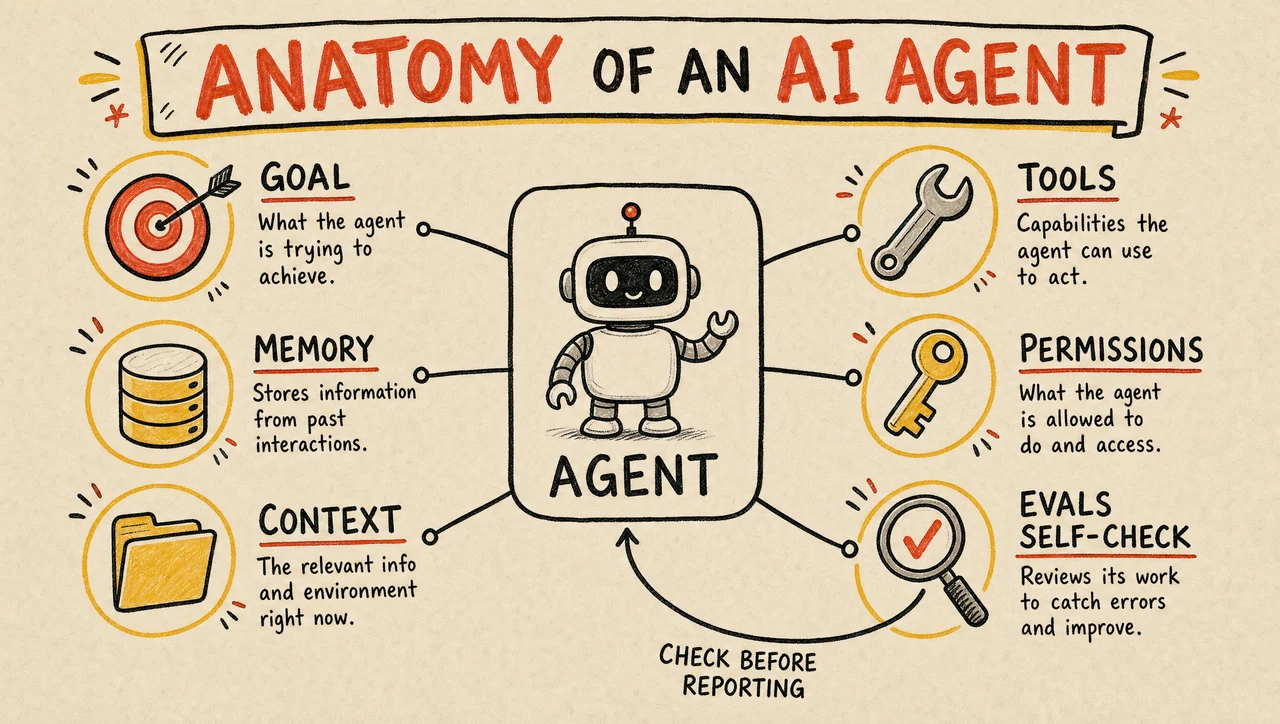
Typing a good prompt is table stakes. The next layer is designing a small AI 'employee' — one with tools, permissions, memory, a clear goal, and a way to check its own work before it bothers you. Most companies are about to have fifty half-working automations and nobody who can turn them into a system; the person who can is hard to replace.
Learn the local side too — running models with Ollama or LM Studio teaches you which jobs need a giant cloud brain and which just need a reliable local worker. First rep: build a daily-briefing agent for yourself (calendar, notes, a few saved links) that shows its sources and asks before sending anything. That one project teaches context, retrieval, tool use, permissions, and evals — the shape of every serious agent.
- The best vibe coding tools (Claude Code repos)
The agent-methodology repos that make designing and running these agents far easier.
- Build an AI sales agent from your chats
A concrete, end-to-end agent project to cut your teeth on.
Skill 2 — Build distribution, not posts
Distribution isn't posting. It's knowing where attention already lives, the exact words people use for their problem, and how to earn trust before you ask for anything. When anyone can ship a product in a weekend, the bottleneck moves to one question: can you make people care?
First rep: pick a niche, map the 20 places its attention actually goes (newsletters, creators, subreddits, the tools they already pay for), then write one painful sentence they'd say out loud — and 20 hooks pointing at it. The real shift is asking 'what existing desire am I pointing this at?' before you build, not after.
- How to get your first users
The free channel map — where a vibe-coded app's attention actually comes from.
- Make your app go viral with UGC
The mechanics of turning one insight into short-form that converts.
Skill 3 — Build hardware: move atoms, not just pixels
The last decade rewarded people who moved pixels; the next rewards people who can also move atoms. Robotics used to mean a PhD and custom parts. Now there are cheap arms, cheap cameras, open robot-learning projects (Hugging Face's LeRobot, the low-cost SO-101 arm), and small vision-language-action models you can train without an industrial lab.
The rare skill is the whole loop: build the hardware, wire in the AI, and source the manufacturing. First rep: get a low-cost arm and a camera, teach it one boring task (sort three objects, press a button), and document every failure — bad lighting, a slipped gripper, too small a dataset. Then learn supplier basics: ask for a sample before bulk, get specs and lead times. The person who connects open-source AI, prototyping, and manufacturing builds things that feel like sci-fi but sell like tools.
Skill 4 — Curate with a point of view
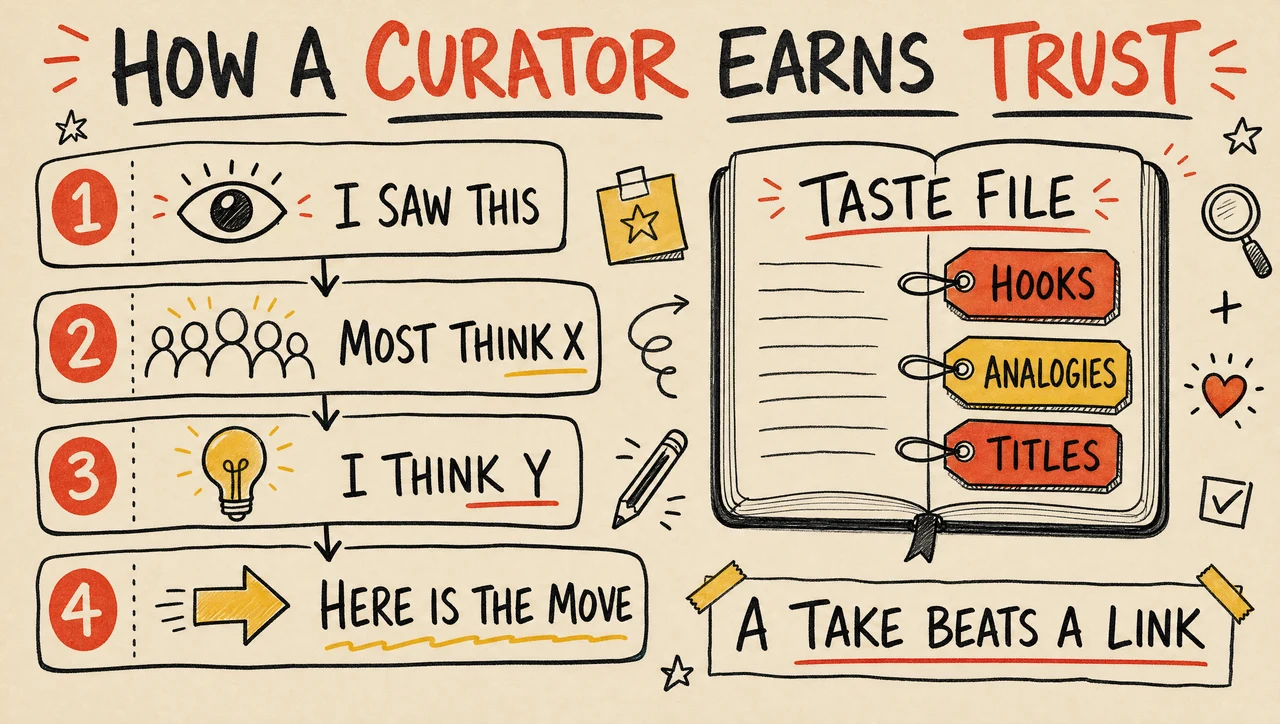
The internet is drowning in information and AI slop, so the person who makes sense of it in public — with a take — gets trusted. Curation isn't 'five links'; it's 'here's what matters, and why,' translated for one specific niche. Algorithms are rewarding raw, authentic talking-to-camera precisely because people are tired of polished slop.
First rep: a seven-day curation sprint. Pick a lane; each day find three things and post one short video on the same structure — 'I saw this / most people think it means X / I think it actually means Y / here's the move.' That structure forces a take, which is the whole difference between curating and forwarding links. Keep a taste file of hooks and analogies you love; your outputs are only as good as your inputs.
- Make your app go viral with UGC
The short-form playbook that pairs with a curator's point of view.
Skill 5 — Be the builder-distributor
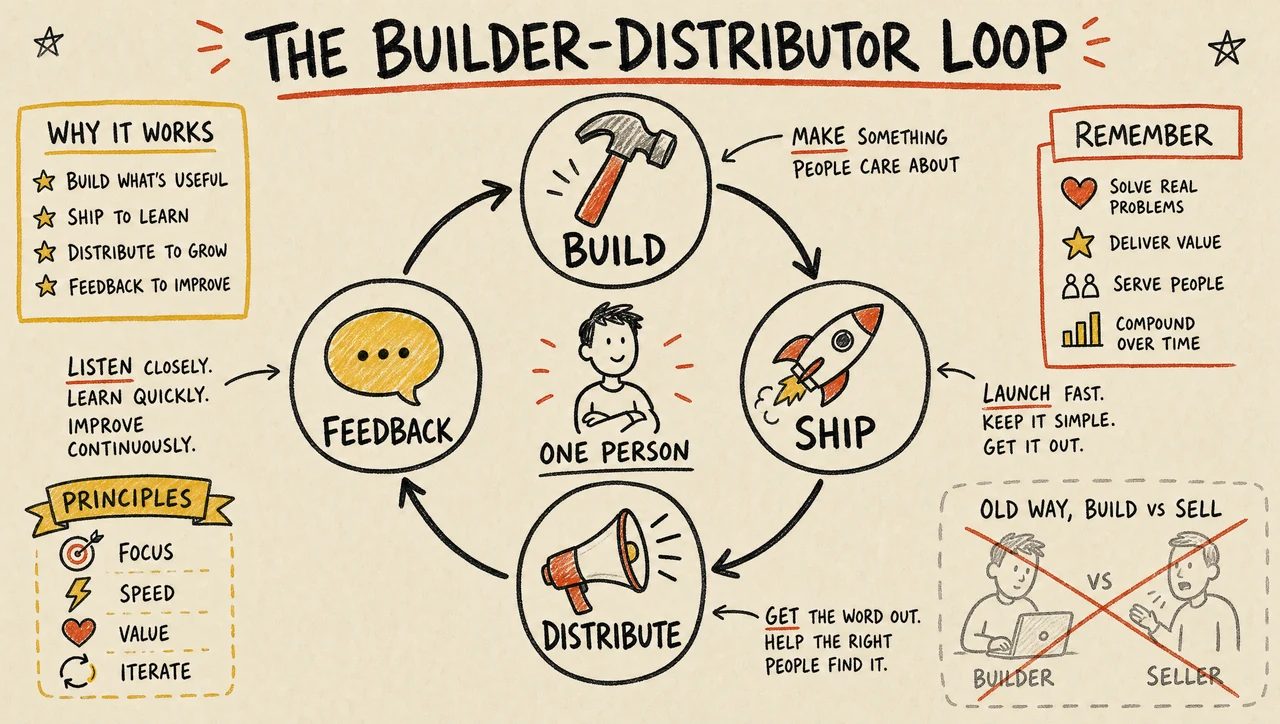
For years it was a clean split: one person builds, one person sells — Wozniak and Jobs. AI compresses that. One person can now prototype the product, make the landing page, write the launch thread, record the demo, message the first 100 users, and iterate — without waiting for a handoff. That's where the real edge, and the one-person-big-business dream, lives.
The loop is the whole game: build something small, put it in front of people, watch where they get confused, change it, repeat. Most people only do half — they build in private forever or talk in public forever. First rep: the 48-hour loop — build the smallest ugly version of one problem you understand, then make 10 pieces of distribution for it before you feel ready.
- How to validate your app idea
Point the build half of the loop at something people actually want before you ship.
Skill 6 — Build community in real life
As work moves to agents, chats, and feeds, real rooms get more valuable, not less. AI makes content, software, and advice abundant — so scarcity moves to belonging, trust, and context: who actually knows you, who'd answer your text, who'd introduce you to a customer. The in-real-life community builder creates that.
First rep: don't run a big event — host six to eight people around one sharp question ('what skill are you learning because of AI?'), then send a short recap with the best quotes and one follow-up everyone should do. A great community is a habit, not an event: same people, same promise, better conversations each time. The recap is what turns a room into a network.
How do you stack these?
The edge isn't mastering one skill — it's knowing how the pieces fit. The agent person builds tools for the community; the marketer grows it; the curator turns its best conversations into content; the builder-distributor launches products from it; the hardware person brings the weird demos. That's the stack.
Pick one and get dangerous. Pick three and you're the person everyone wants in the room — or building the company. The job market over the next decade is anyone's guess; a real skill is your shield.
- Start here: get your first users
The fastest skill to start compounding for a maker — distribution from zero.
- List your app on Vibedonalds
Free after a quick review — a niche, crawlable directory for vibe-coded and AI-built products.
Frequently asked questions
- Is 'learn AI' actually bad advice?
- It's too vague to act on. 'Learn AI' is like '90s advice to 'learn computers' — true but useless. The useful version is to learn a durable skill that gets more valuable as AI improves: running agents, distribution, hardware, curation, shipping-and-selling, or building real community.
- What's the most valuable skill in the AI era?
- There isn't a single one — the edge is the combination. As AI makes building cheap, value moves to judgment, taste, distribution, and real-world reach. Pick one of the six core skills and get genuinely good; pick three and you can take an idea to market alone.
- What should a beginner learn first?
- Pick one of the six and do its smallest rep this weekend. The easiest starting points for a maker are running a simple agent (a daily-briefing bot) or distribution (map a niche's attention and write 20 hooks). Momentum beats picking the 'perfect' skill.
- Do I need to learn to code for these?
- For several, no. AI now does much of the building, so the agent, distribution, curation, and community skills lean on judgment and taste more than code. Hardware and deeper agent work reward some technical comfort, but you can start every one of them without a CS degree.
- What is a builder-distributor?
- One person who both ships the product and gets it in front of people — prototyping, landing page, launch, demo, first users, and iteration, with no handoff. AI compressed the old build-vs-sell split into a single role, and it's the skill behind the one-person, big-business idea.