How to Get Your First Users for a Vibe-Coded App: From Zero to Your First 5,000 Downloads (2026)
The cheapest way to get your first users for a vibe-coded app is organic short-video: post native-looking TikToks and Reels from accounts that read like your target user, and convert people in the comments — no ads, no influencers. It's slow at first and most clips flop, but it's how indie consumer apps go from zero to their first thousands of downloads.
You vibe-coded an app. The build was the easy part — now it has no users, and that's the half most makers lose on. This is a channel-by-channel playbook for your first traction on no budget, going deepest on the organic engine most people get wrong. No invented numbers; where a figure comes from someone else's campaign, it's marked.
What actually gets a vibe-coded app its first users?
Three free channels do the real work for a new consumer app: a launch moment, the communities where your user already hangs out, and organic short-video. Paid ads and influencers come later — they scale something that already converts, not how you find your first hundred users.
Most makers over-invest in the launch spike and ignore the channel that compounds: organic video. So this guide handles the launch and community channels briefly, with step-by-step links, then goes deep on the one that keeps paying off.
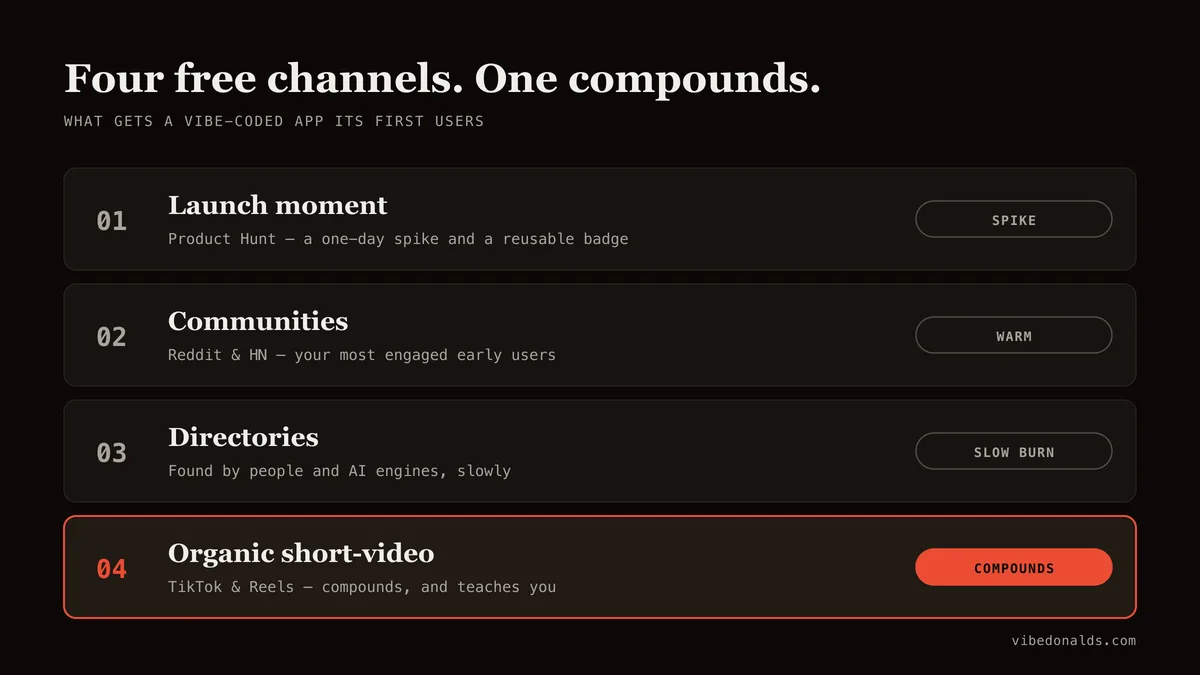
- Launch on Product Hunt
The one-day attention spike and a reusable badge — distribution and social proof, not SEO.
- Reddit & Hacker News
The communities that send your most engaged early users, if you post a story instead of an ad.
- Where to list your app
Directories that get you found later — free, slow-burning, and crawled by AI engines.
- Get cited by ChatGPT & Perplexity
How AI answer engines start recommending your app when someone asks for a tool like yours.
Why is organic video your best free channel?
Short-video marketing — often called UGC, for user-generated content — works because it doesn't look like marketing. A clip from an account that looks like a real user reads as a friend's recommendation, and people trust word of mouth over any ad. At volume, you market from inside your audience's feed instead of buying your way in.
It's also a research engine. Every clip teaches you which hook and pain point your users react to — signal you can fold straight back into the product. That two-for-one, distribution plus product feedback, is why indie consumer apps lean on it.
Who should not bother with this?
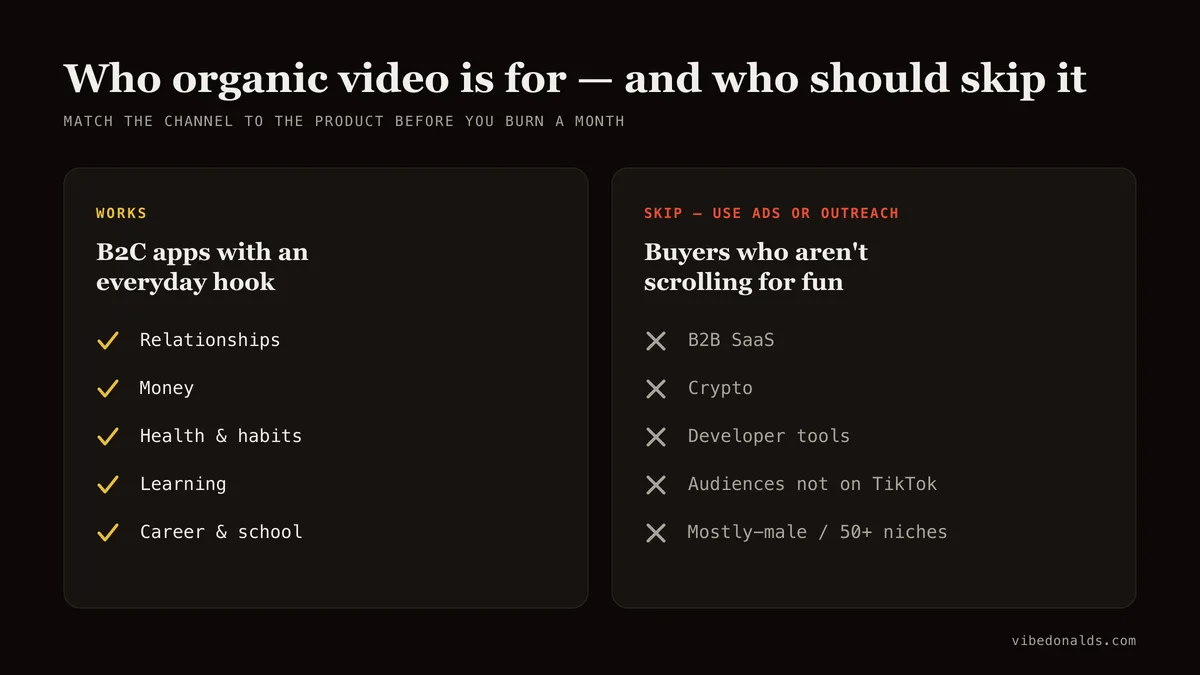
Organic video pays off for consumer (B2C) apps with a clear everyday hook — relationships, money, health, learning, career. If that's your app, it's the best free channel you have.
It's a poor fit for B2B SaaS, crypto, dev tools, and audiences that aren't on TikTok. For those, founder-led content, communities, and direct outreach win — don't burn a month on clips that can't reach your buyer. One agency that runs these campaigns turns down crypto and B2B work for exactly this reason.
How do you set up so the right people see you?
Before you post a single video, two things decide whether the algorithm sends it to buyers or to nobody:
- 01Name your user. Not 'everyone' — one specific person ('someone who just moved cities and wants friends'). If you can't describe them, you can't reach them.
- 02Make the account look like that user, not your brand. A real-looking profile photo and a bio in their words ('learning Spanish in 70 days') convert better than your logo — people trust a peer, not an advertiser.
- 03Warm up the account. For a few days, search and watch the exact terms your user would ('how to make friends in a new city'), so the algorithm learns who you are before you post.
- 04Borrow their words. Screenshot the captions, comments, and hashtags in your niche, drop them into ChatGPT, and pull the recurring slang and phrases. Use those so you sound native, not corporate.
What videos convert — and why do the comments matter more?
Start by remaking what already works in your niche. Find the clips going viral around your topic, rebuild them, and plug your app in naturally. The old 'hook then demo' and 'pain point equals solution' formats are burned out; talking-to-camera videos, multi-part stories, and slideshows convert better now because they don't smell like an ad.
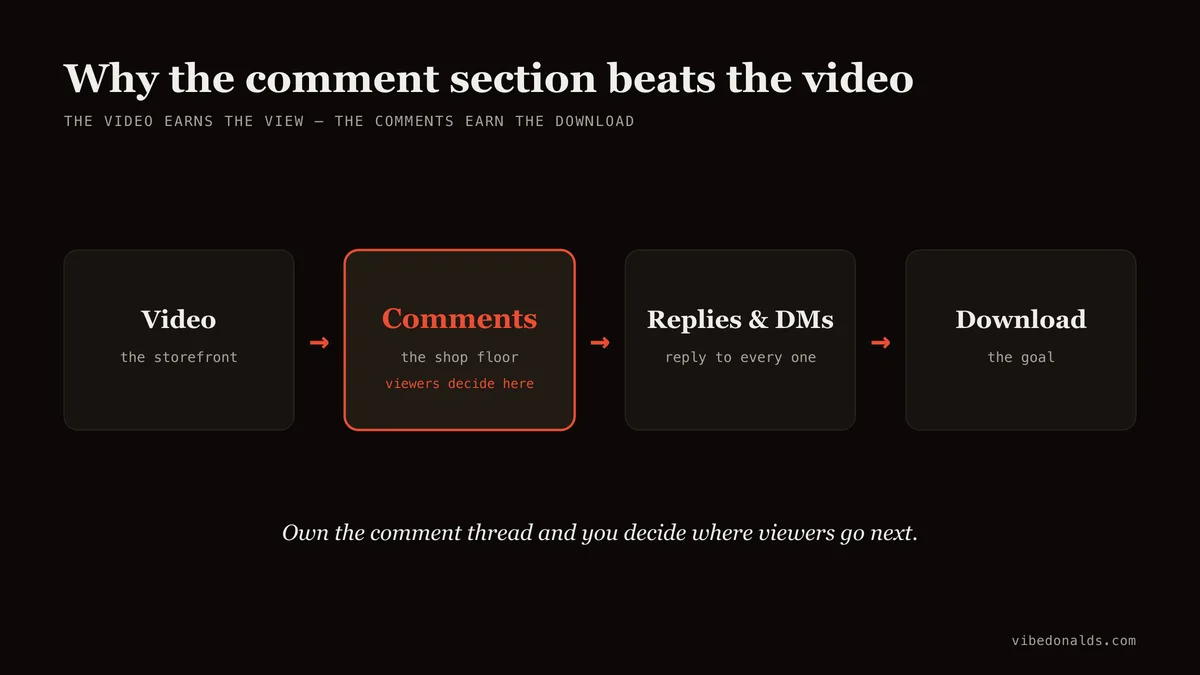
Here's the part most makers miss: the video is the storefront, but the comment section is the shop floor. People watch, then scroll the comments to see what everyone else thinks. Own that conversation and you decide where viewers go next.
So reply to every comment, post video-replies to the top ones (the algorithm pushes those to the same viewers), and message people who engage. When a clip pops, that comment thread — not the video — is what turns a viewer into a download.
How do you turn views into downloads — and get found in the store?
A viewer is mid-scroll and half-addicted to the app they're already in. To earn a download you have to interrupt that, point them to the store, and survive onboarding — so cut every needless step. The clips that convert best name the problem, not the product, and let the comments hand over the link.
Then there's the store itself. Your app title and subtitle are searchable, so put the words real users type into them. Your screenshots are your biggest conversion lever — the first two should land the hook in three seconds and echo the message that brought people there, so the hand-off doesn't feel like a different product. That's App Store Optimization (ASO), and it's the cheapest download multiplier you have once traffic arrives.
How long until it works?
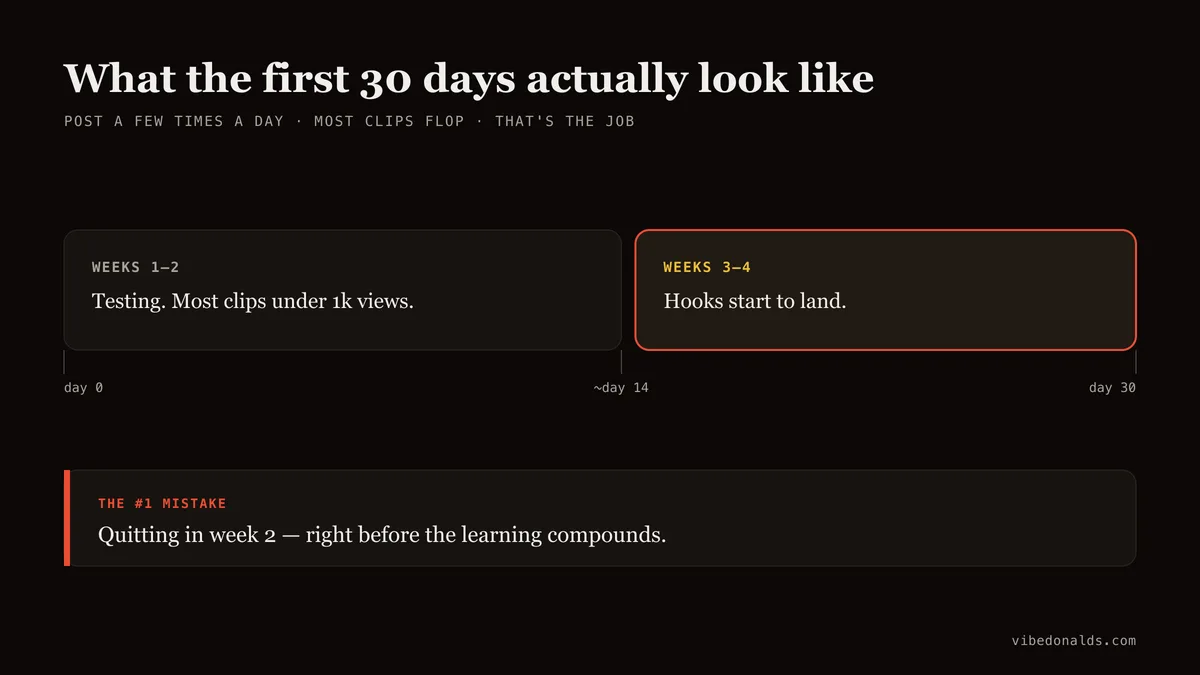
Longer than you want. Posting a few times a day, expect the first couple of weeks to be pure testing — most clips flop under a thousand views, and that's the job, not failure. The hooks that catch usually show up around weeks three and four, once you've fed the algorithm enough to learn from.
The two ways makers blow it: a clip goes viral but has nothing to do with the app, so it converts no one; or they quit in week two, right before the learning compounds. When something works, don't move on — repost it with small tweaks until it stops working.
How do you scale beyond doing it yourself?
Do it yourself first — you can't direct creators on a channel you've never run. Once you have a few formats that convert, hire creators who look like your audience (post that you're hiring, and do direct outreach). Past three to five creators, bring in one person to manage and review them so you can get back to the product.
On cost, one agency that staffs these campaigns cites roughly $125–175 a week per creator for about 15 posts, paid as a flat rate plus view-based bonuses rather than per download. Treat it as a medium-term bet — and fix your onboarding-to-paid conversion before you pour money into more reach, or you'll just buy traffic that leaks.
Where does Vibedonalds fit in?
Organic video gets you users; directories get you found by the people — and the AI engines — already searching for a tool like yours. Listing where you're crawlable is the slow-burn complement to the fast-burn of social, and it keeps working while you sleep.
List your vibe-coded app on Vibedonalds — free after review — and work the launch and community channels above in parallel. No single channel gets you to your first 5,000 downloads; the stack does.
- List your app on Vibedonalds
Free after a quick review, or instant for $10 — a niche, crawlable directory for vibe-coded and AI-built products.
Frequently asked questions
- What's the cheapest way to get your first app users?
- Organic short-video on TikTok and Reels. You post native-looking clips from accounts that resemble your target user and convert people in the comments — no ad spend. It's slow and most clips flop, but it needs only your time, which makes it the default first channel for a no-budget consumer app.
- Does this work for B2B SaaS?
- Rarely. Organic UGC suits consumer apps with an everyday hook — relationships, money, health, learning. For B2B SaaS, crypto, or dev tools, founder-led content, communities, and direct outreach convert far better. Don't spend a month on clips your actual buyer will never see.
- Do I have to show my face?
- No, but someone should look real. The highest-converting accounts feel like a peer, not a brand, so a genuine face helps. If you won't film yourself, hire a creator who fits your audience or use an AI-avatar tool — just keep it from reading as an ad.
- How many videos before one goes viral?
- Plan for most to flop. Operators who run these campaigns post a few times a day and treat the first two weeks as testing — often a hundred-plus clips — before hooks start landing in weeks three and four. The failures are how you find the winner.
- TikTok or Instagram first?
- Start on TikTok. It targets better, converts higher, and its fast feedback makes it the better place to learn your audience. Cross-post the same clips to Instagram Reels for extra reach, but spend your real effort where the research and conversion happen.
- Should I just run ads instead?
- Not for your first users. Ads scale something that already converts; they won't tell you what your audience wants. Earn your first traction organically, learn which hooks land, fix onboarding — then pay to amplify the winners if the math works.