How to Validate Your AI App Idea Before You Build It: 8 Interviews, Not 1,000 (2026)
The expensive mistake in the vibe-coding era isn't building the app — it's building the wrong one. You validate an AI app idea by talking to about eight people in your target market before you build, and listening for the single capability they all wish existed. That's your wedge. Higgsfield's founder did exactly that on the way to a ~$200M run-rate.
Building is the easy part now — a prompt and an afternoon get you a working app, so the risk moved: you can ship fast and still ship something nobody wants. This is how to validate the idea first, drawn from how Alex Mashrabov validated Higgsfield (now around a $200M annual run-rate, per his interview on Marina Mogilko's show). His figures are his, and marked as such — treat them as one founder's results, not a promise.
Why do most vibe-coded apps die before the first user?
A year ago, building was the bottleneck. Now a prompt and an afternoon get you a working app, so the bottleneck moved: the risk isn't that you can't build it, it's that you build the wrong thing fast and only find out after launch.
Validation is the cheap insurance. An hour of talking to the right people beats a month polishing an app nobody asked for. The makers who win in this era aren't the fastest builders — they're the ones who build the thing people already told them they needed.

How many customer interviews do you actually need?
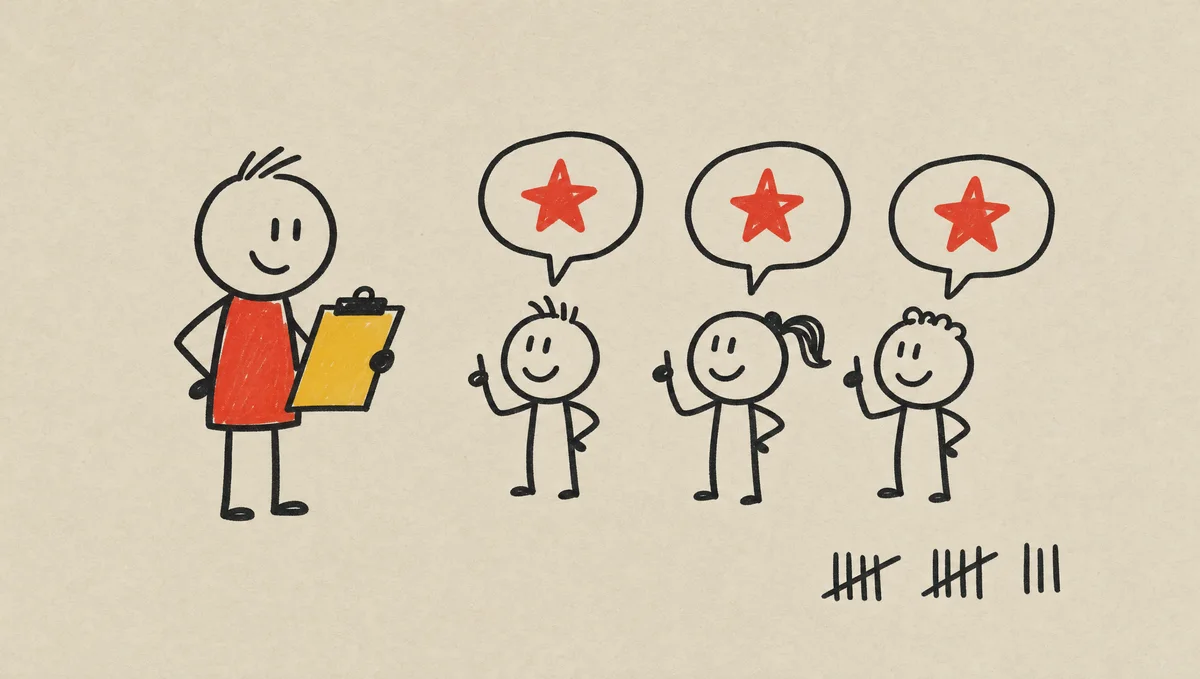
Fewer than you fear. People imagine they need to survey thousands — you don't. When Higgsfield's founder was finding his wedge, he interviewed eight people, and eight out of eight said the same thing. Around ten conversations is usually enough to see the pattern.
The signal is repetition, not volume. Once the third or fourth stranger names the same missing thing, you've found something real. If ten people give you ten different answers, you don't have a wedge yet — keep looking before you build.
Who do you interview — and what are you listening for?
Talk to strangers in your target market, not your friends. Higgsfield deliberately interviewed people they didn't know — Hollywood directors and regional ad producers — to get unbiased answers. Friends tell you what you want to hear; strangers tell you the truth.
Listen for the one capability everyone wishes existed. For Higgsfield it was camera control — creatives wanted to direct the AI's angles and effects, and no tool let them. That single missing feature became the first wedge. Build that, not a long feature list.
Then the move most people skip: he hired four of the eight. Your best interviewees understand the problem better than you do — turning them into your team, or at least a standing feedback loop, keeps you building the right thing as the market shifts.
Who should you build for — and will they pay?
Pick the segment that pays, not every user. The trap is chasing everyone; the move is finding the slice with a painful problem and a budget. Higgsfield aimed at customers willing to spend around $2,000 a month — marketing agencies and e-commerce brands churning out video ads — not casual users.
This is where 'riches in niches' is literal. Mashrabov's example: a real-estate firm using AI for property ads, in an industry where nobody builds for the specific customer journey — listing, site visit, call, deposit. A narrow niche with a frequent, painful workflow beats a broad app no one will pay for.
What numbers tell you it's actually working?
Watch daily active users and what each customer pays — not monthly actives. A monthly-active count can be inflated by one viral spike and tell you nothing about whether people come back or pay. Higgsfield tracks daily actives and average contract value as its two core metrics.
And aim to make money early. The norm for applied-AI products now is profitable from day one, not growth at all costs — many of the hyped AI companies are quietly profitable. Build a real business first, then decide if you even want outside money.
What does the first 90 days look like?
Mashrabov's framework, as he laid it out: a first dollar by day 30, and a $1M annual run-rate — roughly $80K a month — by day 90, then decide on funding. Treat those as his targets, not a promise; the point is the shape: monetize early and compound, don't build in silence for a year.
Iterate fast and distribute where AI products catch. Higgsfield shipped a release most days while finding its wedge. For getting noticed, the path he describes starts on X (Twitter) — small communities, then AI news accounts, then creators, then Telegram — still the default launchpad for a new AI product.

Where do you take a validated idea next?
Validation tells you what to build and who pays for it. Once it's built, the next job is getting it in front of those people — and that's its own playbook.
Get your first users, make the short-form videos actually convert, and list where you're findable while you do.
- How to get your first users
The free channel map and the organic-video setup basics, once you've validated what to build.
- Make your app go viral with UGC
The deep mechanics — the metric that predicts virality and how to scale creators.
- Where to list your app
Directories that get you found by people and AI engines while your distribution runs.
- List your app on Vibedonalds
Free after a quick review — a niche, crawlable directory for vibe-coded and AI-built products.
Frequently asked questions
- How many people should I interview to validate an app idea?
- Around ten is usually enough to see a pattern. One founder found his product's wedge after just eight interviews, where eight of eight named the same missing feature. You're looking for repetition, not a big sample — when strangers keep naming the same gap, it's real.
- Should I interview strangers or people I already know?
- Strangers in your target market. Friends and family soften their answers to be kind, which gives you false signal. People who don't know you — ideally working in the industry you're targeting — tell you the unflattering truth you actually need before you build anything.
- Do I need to raise VC to launch an AI product?
- Often no. Many applied-AI products are profitable from day one, and capital is abundant if you do want it. Aim for a first dollar early and a real business; raise later only if the growth genuinely needs it, not by default.
- What metric should I track instead of monthly active users?
- Daily active users and average revenue per customer. Monthly actives can be inflated by a single viral spike and hide whether people return or pay. Daily use plus what each customer spends tells you if you've built something with real, recurring value.
- Where do new AI products get their first distribution?
- Usually on X (Twitter): it starts in small communities, spreads to AI news accounts, then creators, then Telegram. It's still the default launchpad for a new AI product, even as it gets noisier — and from there you lean on directories, launches, and short-form video.