Attention Is the New Oil: Why You Can't Ship an App and Skip Social Media (2026)
If you built something with AI, posting is getting hard to ignore. GaryVee's 'interest media' shift is real — more feeds now recommend content by interest, not only by who follows you — so a maker with zero followers can sometimes out-reach an established brand. That's the unlock and the mandate: building got faster, getting seen is the job, and many products struggle to grow without it. Here's the honest first move, written for a builder who would rather ship a feature than post.
Marketing operator Gary Vaynerchuk's blunt view is that people and brands that don't publish regularly become less visible. You don't have to like that. But the mechanics shifted in your favor — a no-name account is on a far less follower-gated field than before — and the window won't stay open forever. This guide is the on-ramp: why a builder can't easily skip social, the one shift that makes it possible from zero, and a first move you can run even if marketing makes you wince.
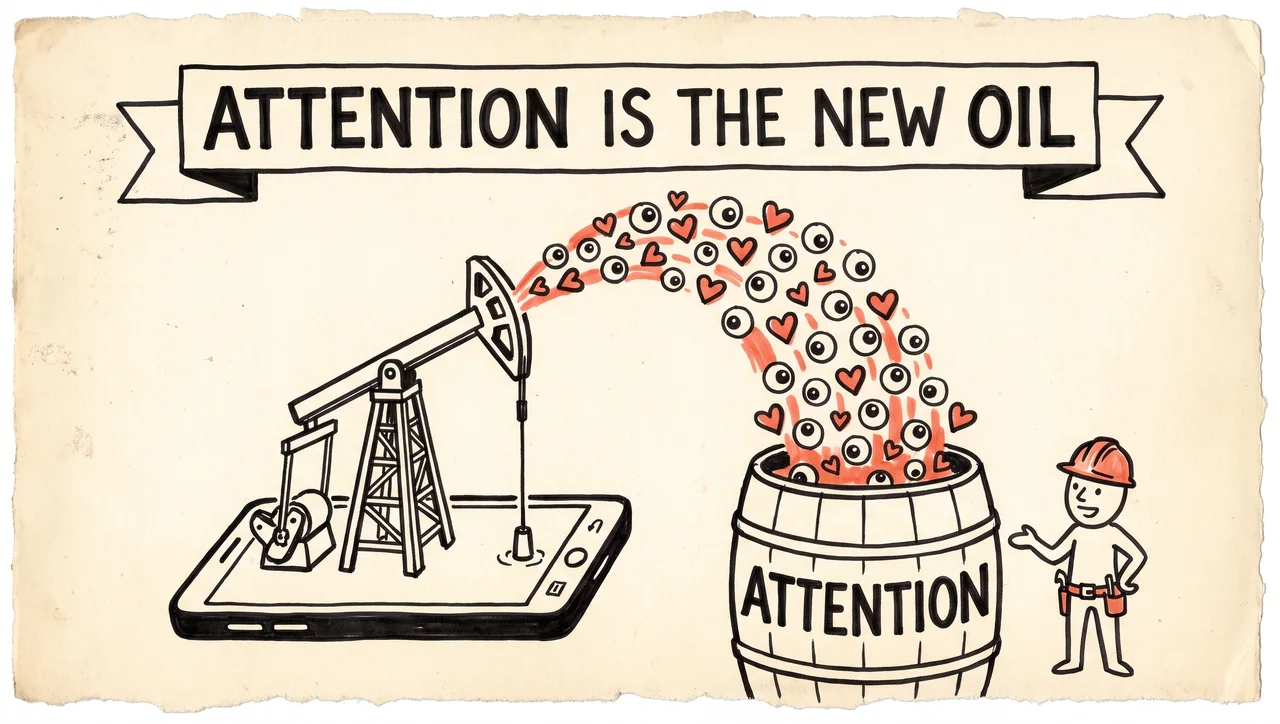
Do you really need social media if you built your app with AI?
Yes — and it's hard to skip. As AI makes building faster for many makers, the scarce thing isn't the build; it's attention, and you have to drill for it yourself. Attention is the new oil. The blunt version, from marketing operator Gary Vaynerchuk, is that people and brands that don't publish regularly get less visible — not because posting is virtuous, but because the feed is now where people find things, and a product nobody sees may as well not exist.
The good news is the part nobody tells builders: the game just tilted toward you. A brand-new account is no longer at a hopeless disadvantage to a big one — and the reason, in the next section, is the single most empowering fact for someone starting from zero.
What changed: social media became interest media
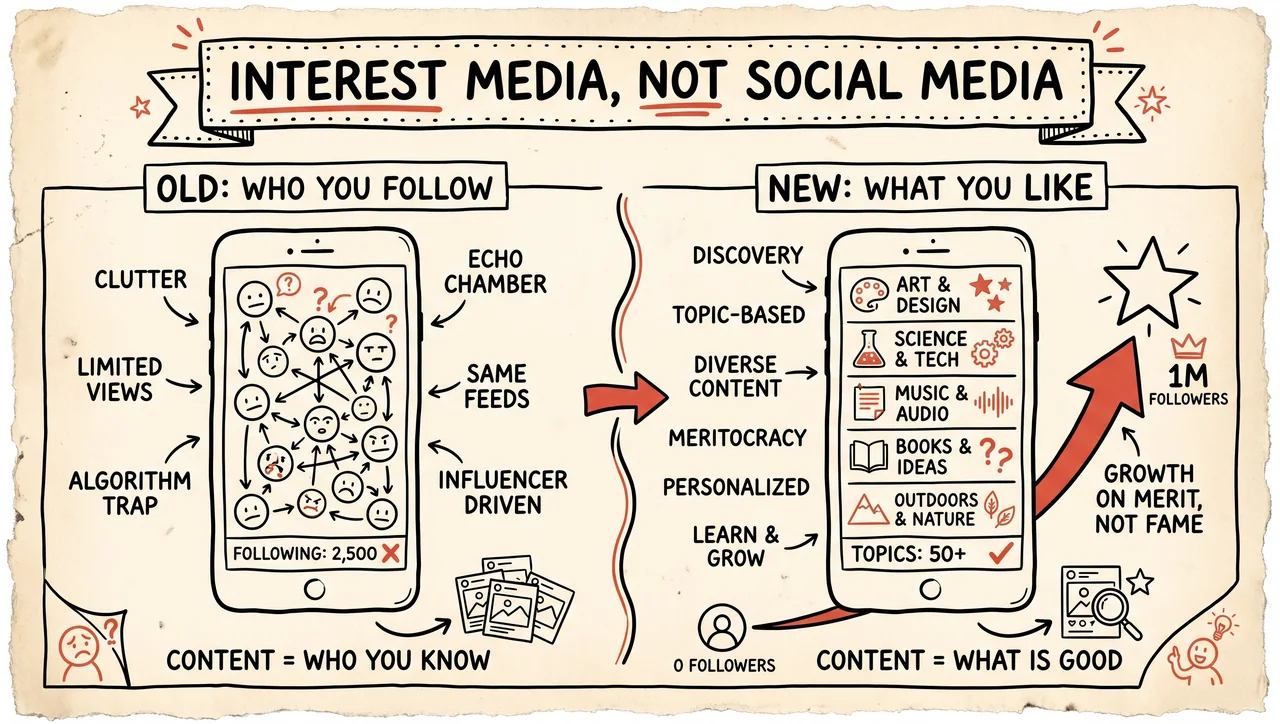
Here's the shift that makes this possible. A few years ago your feed was mostly people you followed. Now the major discovery surfaces — TikTok's For You feed, Instagram and Facebook recommendations — serve a lot of content by predicted interest, what Vaynerchuk calls 'interest media.' That loosens the grip of follower count; a post's own performance matters more than it used to.
For a maker that changes a lot. It means a brand-new account with zero followers can sometimes out-reach an established one — Vaynerchuk gives self-reported anecdotes of fresh accounts beating his big one. The broader data points the same way: Meta says a meaningful share of Facebook and Instagram feed content is now recommended from accounts people don't follow, and short-video feeds lean heavily on watch and completion signals alongside engagement and relevance — not mainly on who you already are. You don't need an audience first so much as one good post.
The reframe: you're a developer who distributes
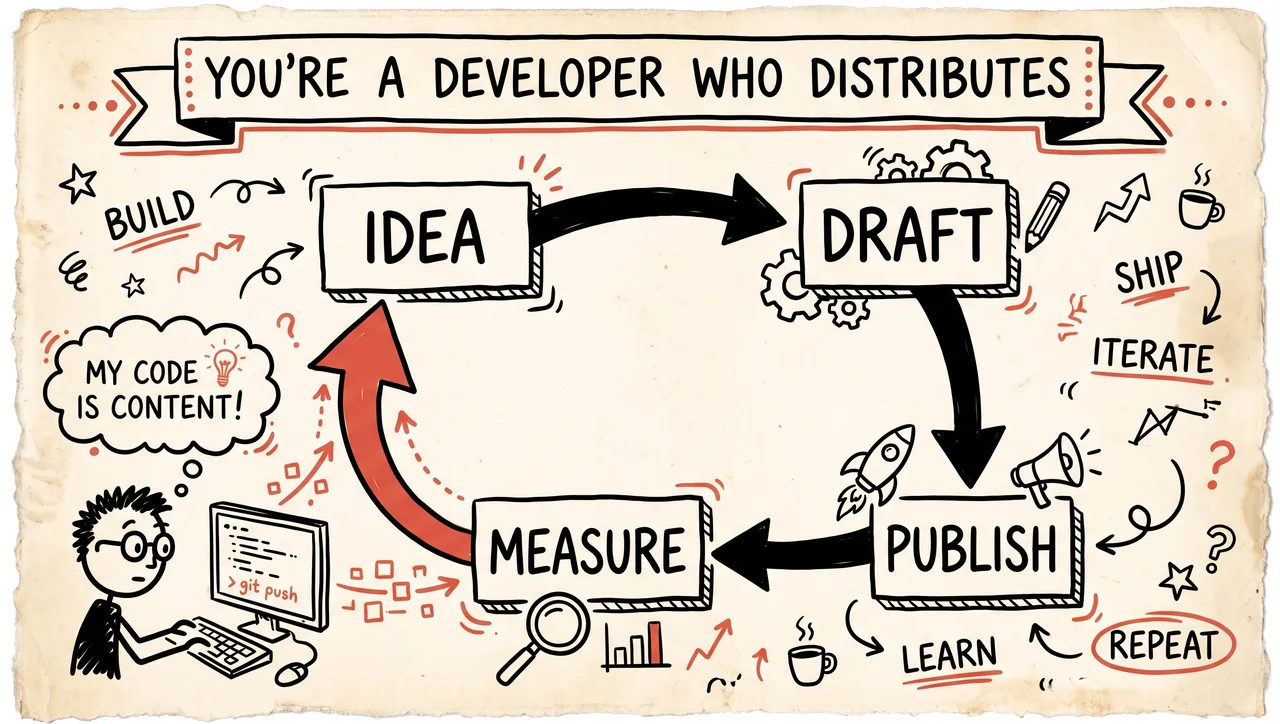
If you'd rather add a feature than post, this is the section that matters. Most builders treat social media as self-promotion they're bad at — a personality problem. It isn't. It's a distribution system, and you already know how to build systems. Reframe it in your own language: a posting pipeline (idea → draft → publish), a feedback loop (measure which posts land, do more of those), a test harness (most posts are experiments; a few are hits). That's a build problem, not a stage-fright problem.
The change is in the job title, not the personality. You're not just a developer anymore — you're a developer who distributes. The makers who win the next few years aren't the most charismatic; they're the ones who treat 'getting seen' as part of the product and engineer it the way they engineer the code.
Why can't you wait? The window is closing.
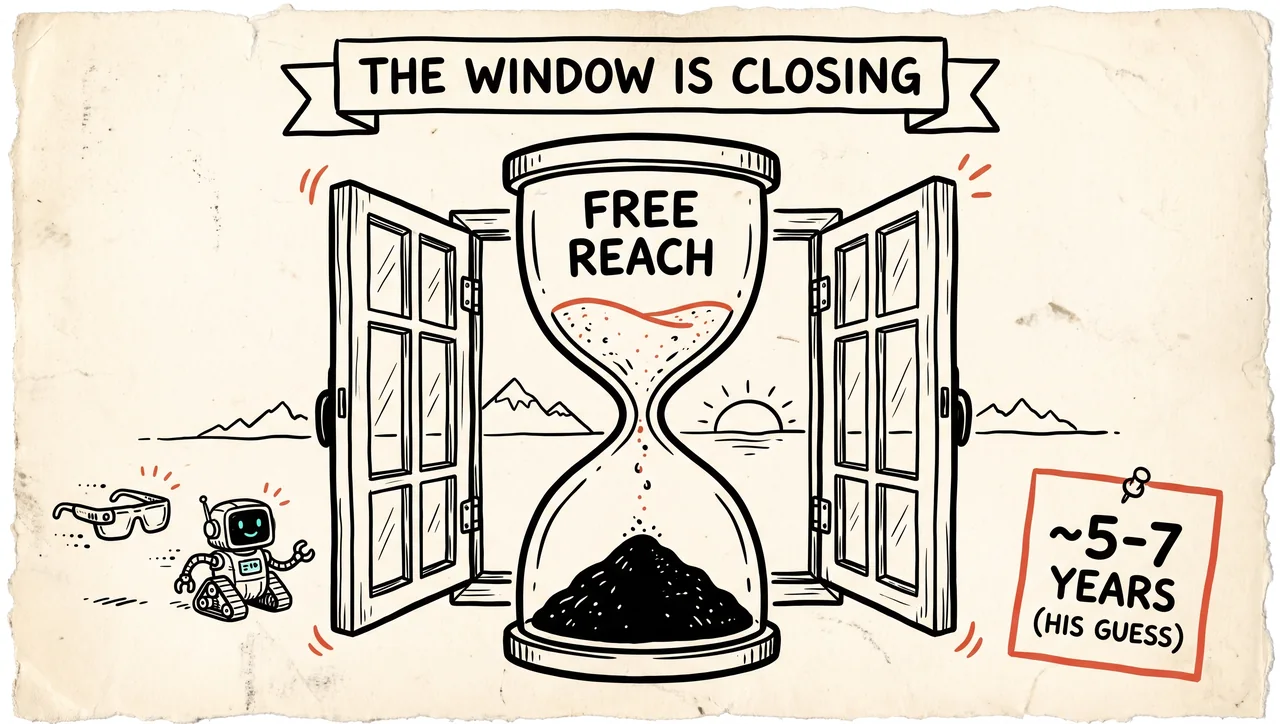
Free organic reach is an arbitrage, and arbitrages close. Vaynerchuk's guess is that we have roughly five to seven more years of this 'golden era of free attention' before AI assistants and smart glasses change how people discover everything (his forecast, not a fact). Whether it turns out to be five years or ten, the direction is clear: cheap organic distribution is available right now, and the competition for it keeps growing.
There's a second reason to move now. As buyers start asking an AI for recommendations, your feature lead is easy to copy and your expertise is easy to commoditize — but a brand people know and trust is harder to copy. Being known becomes a moat that's harder for AI-assisted competitors to reproduce. And the shift is structural, not a fad: Goldman Sachs has estimated the creator economy at roughly a quarter-trillion dollars, growing toward around half a trillion by 2027. Learning to build an audience isn't a nice-to-have; it's where the leverage is going.
The brutal truth: most of your early posts will flop
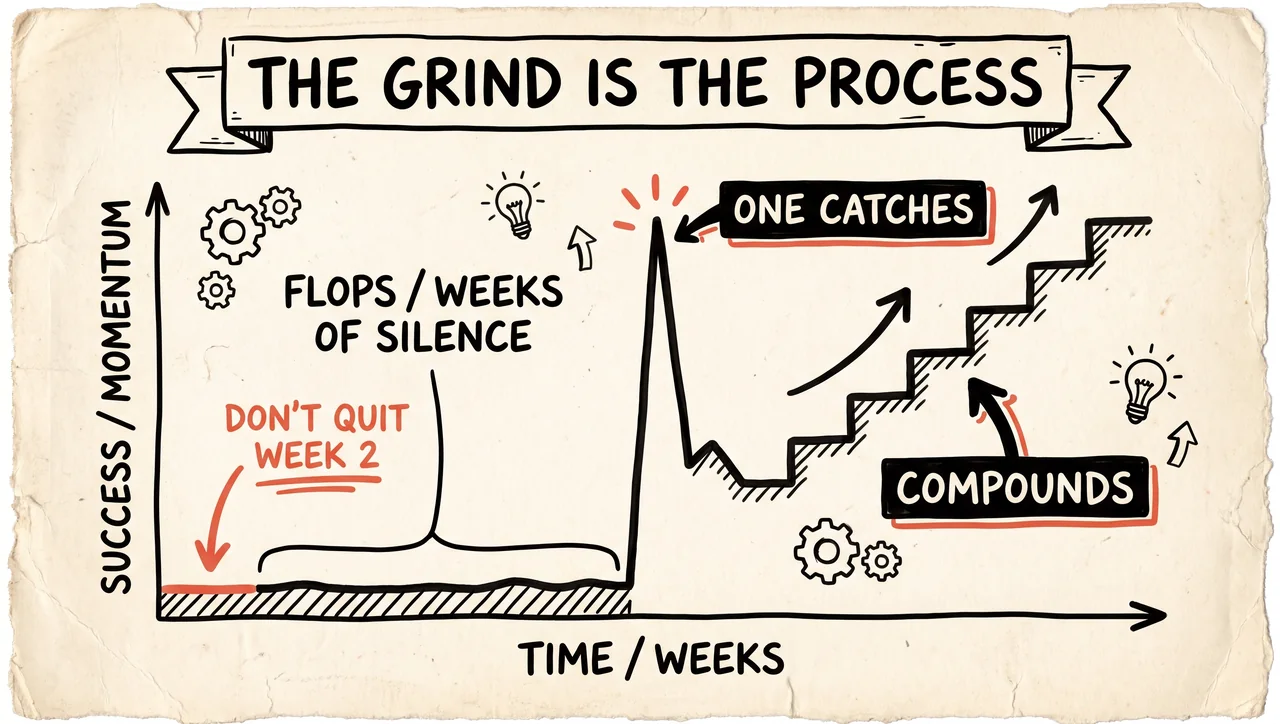
Now the honest part, because skipping it is why most builders quit. Many of your early posts will flop. You'll publish into near-silence, feel stupid, and conclude it doesn't work. Often it does work — you're just in the part everyone hides. The shape is usually the same: weeks of low signal, then a post that catches, then slow compounding as the algorithm learns who to show you to. The single biggest failure mode isn't a bad platform; it's quitting in week two.
Volume and patience are the strategy, not a personality trait. Vaynerchuk's blunt take is that weak performance is a skill problem, not a permanent one — and skills are fixable, with the unglamorous hours of learning what makes a hook, a thumbnail, and an opening line actually earn a view. Treat it like debugging: most early failures are missing knowledge and reps, not a broken system. Post a lot, keep what works, and don't grade week one.
But I hate being on camera — is there another way?
Yes, and it's a real path, not a consolation prize. You do not have to show your face, be high-energy, or look polished on video — that's a self-imposed block, not a requirement. Here's a concrete menu for distributing a product without putting yourself on camera, with the honest trade-offs.
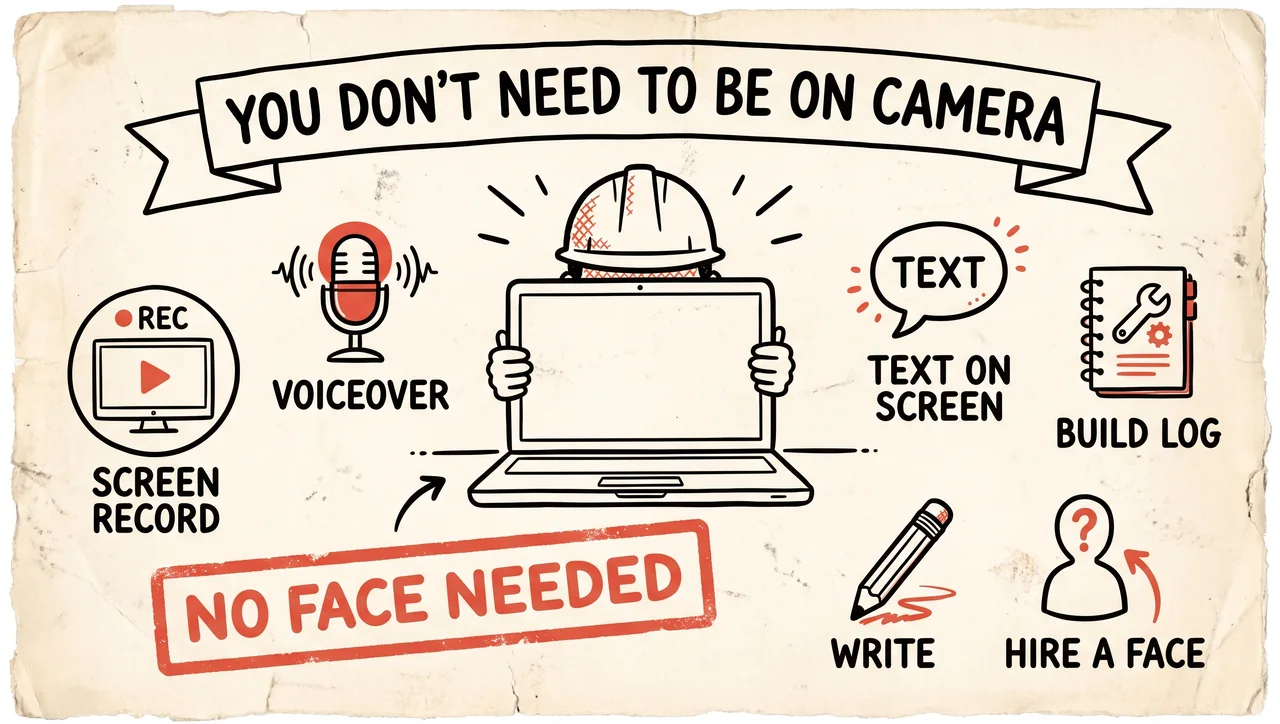
- 01Screen-recordings and product demos — show the thing doing the thing; the most natural fit for software.
- 02Voiceover over a build — narrate while you work or while the app runs; your voice, not your face.
- 03Text-on-screen clips — short, punchy, set to a track; no voice or face at all.
- 04Build-in-public logs — share what you shipped, what broke, and what you learned, in writing or screenshots.
- 05Written content — X threads, a Substack, or Reddit; if you write better than you perform, this is lead-gen for the product.
- 06Hire a creator or use an AI presenter — pay a face or generate one, and keep producing.
Which platform should you pick?
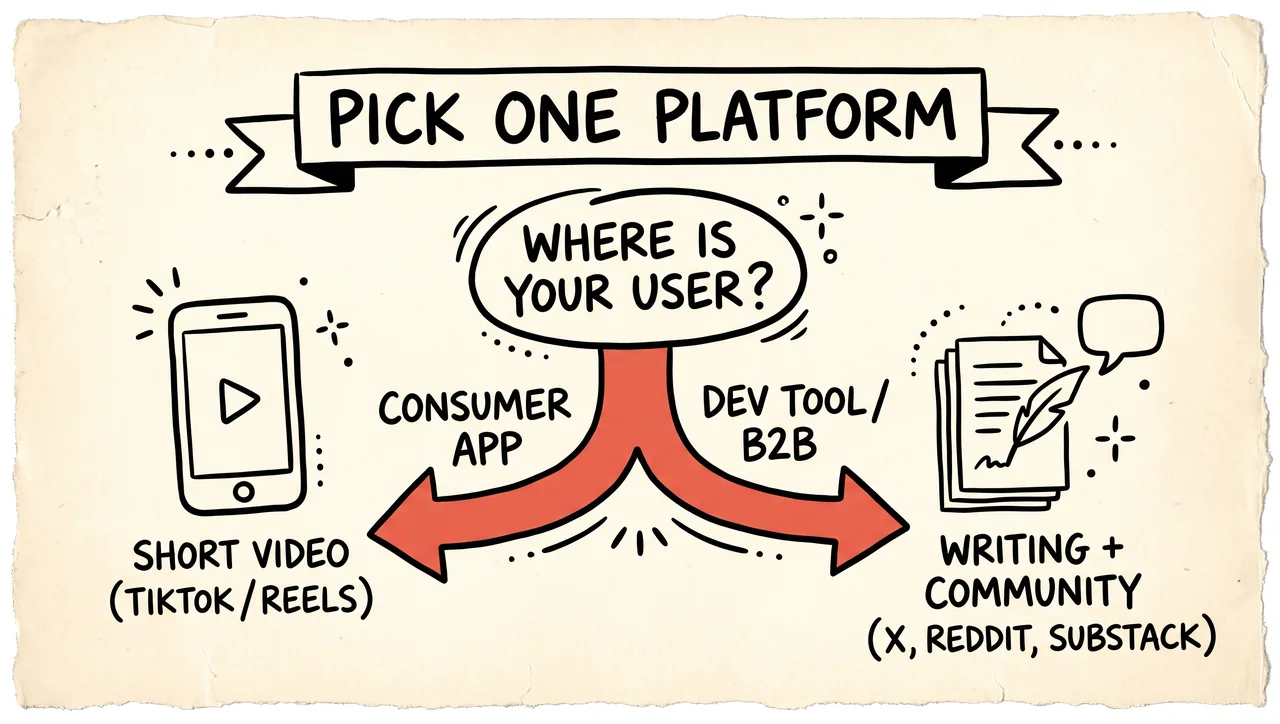
One. Pick one. The roundups telling you to be everywhere are how builders end up doing nothing well. The rule is simple: go where your user already is. A consumer app usually fits short video — TikTok and Instagram Reels, where interest-based reach is strongest and a cold account can pop. A developer tool or B2B product usually fits writing and community — X, a Substack, Reddit, and the niche forums your users already read. Do that one channel well for a few months before you even think about a second.
What should you actually post?
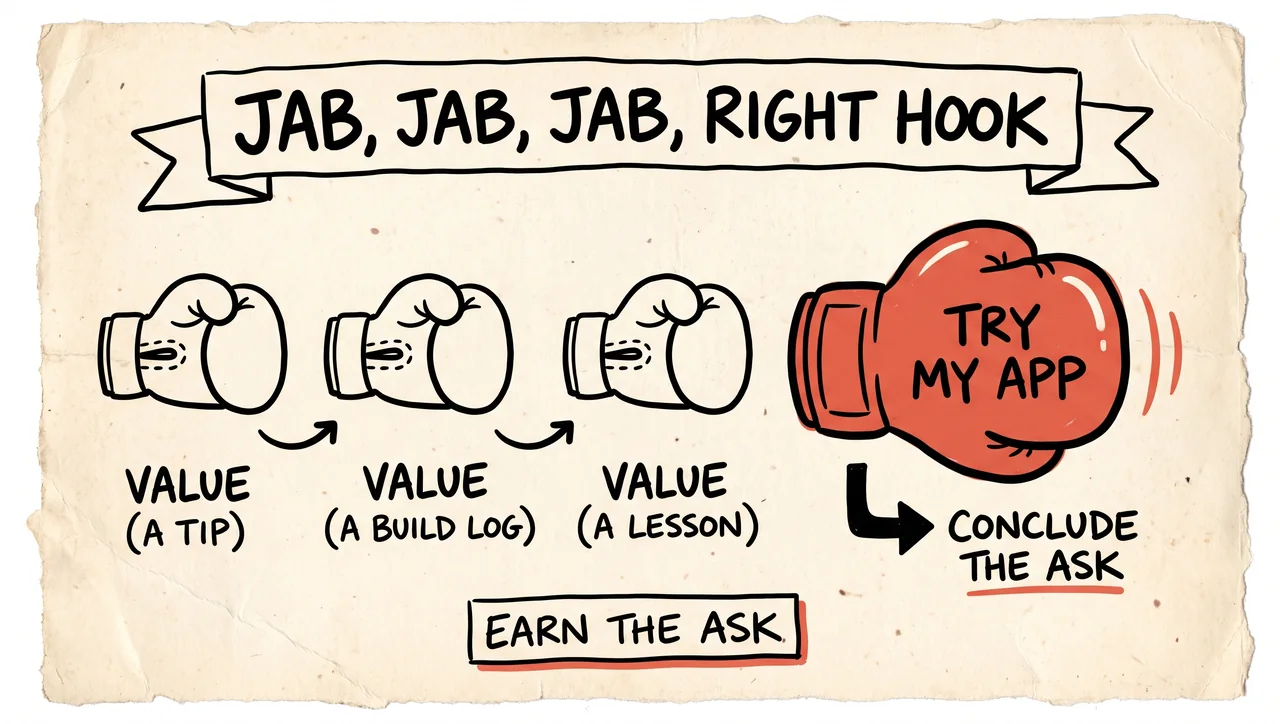
Lead with value, not the ask. Vaynerchuk's framing is 'jab, jab, jab, right hook' — most of your posts should be jabs: free, genuinely useful things (how you built a feature, a problem you solved, a lesson from shipping), given with no strings. The occasional 'right hook' — try my app — converts precisely because you earned it with the jabs. Make every post a sales pitch and people learn to scroll past you.
Concretely, for week one: post the build. The thing you just made is content — the demo, the before-and-after, the bug you fixed, the reason you built it. Make a lot of it, repurpose anything that works (a small re-edit of a winning clip is worth testing again on a fresh account), and use an AI assistant to turn general advice into a plan for your exact niche: 'I built this app for these users — give me ten post ideas and three hooks for this platform.' You won't run out of material, because the work is the material.
What do you do with attention once you get it?
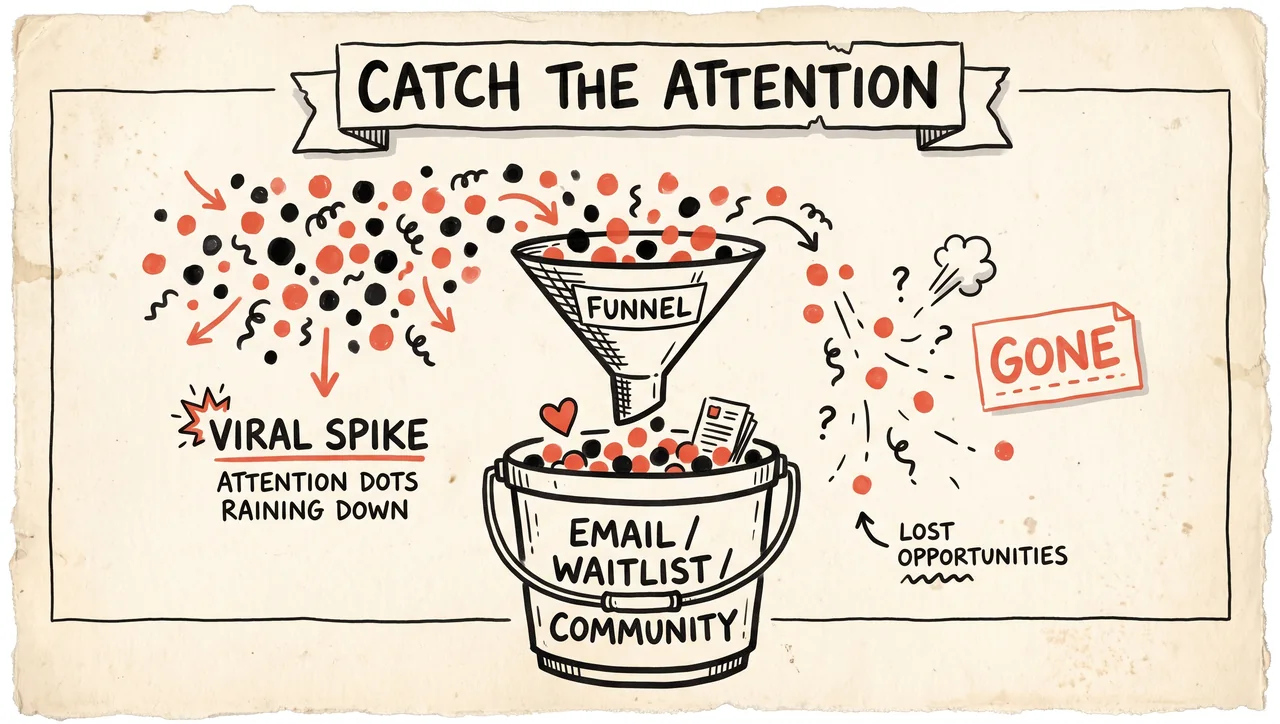
Catch it, or it evaporates. This is the step the hype skips: a viral post that sends a thousand people to a link they don't act on is a thousand people you may not reach again. Before you chase reach, build the catcher — an email list, a waitlist, a small community, a clear next step on the page people land on. The point of the social layer is to feed something durable you actually own.
And don't put every egg in fast-burn reach. Listing your product where it gets found — directories, communities, the places AI answer engines and search crawl — is the slow-burn complement that can keep working after a spike fades. Fast attention, plus an owned audience, plus a few permanent listings is the combination that compounds.
What this guide is not, and where to go next
To be clear about scope: this is the on-ramp — why you can't skip social, the one fact that makes it possible from zero, and the mindset to survive the flop weeks. It is not the deep tactical manual. When you're ready to actually run it, here's where to go.
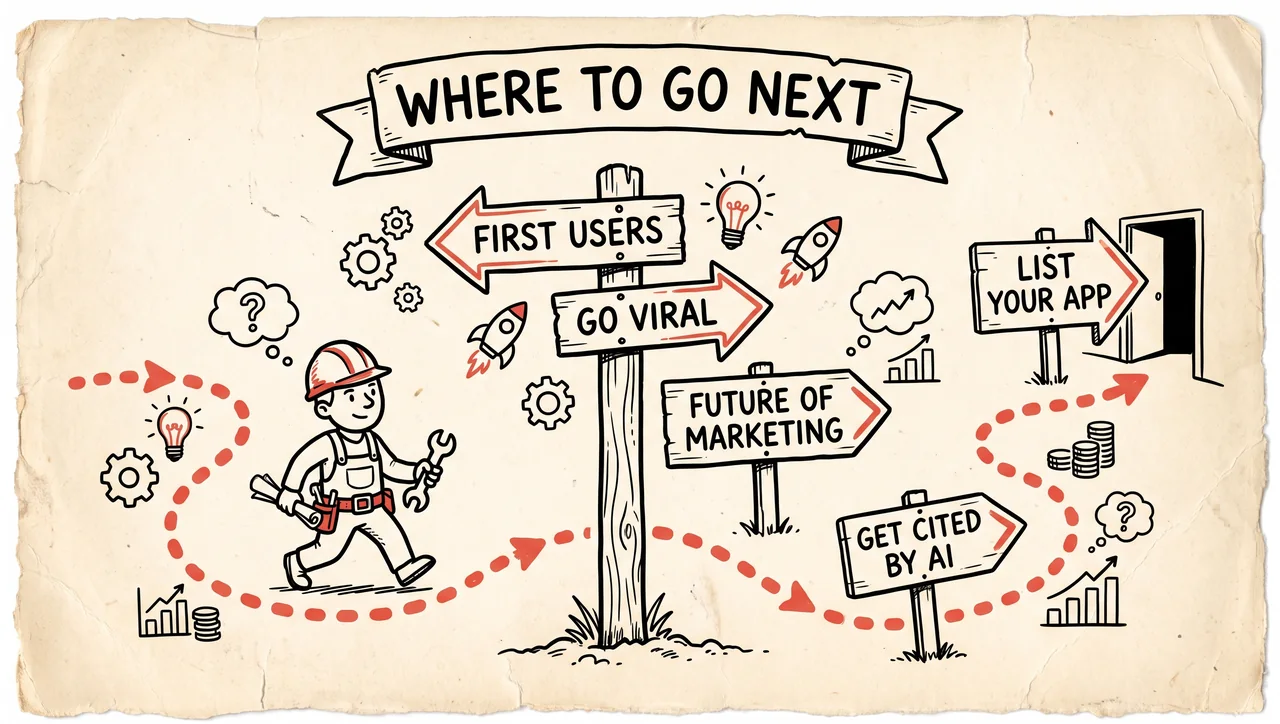
- How to Get Your First Users for a Vibe-Coded App
The channel map and the concrete zero-to-first-users playbook.
- How to Make Your App Go Viral with UGC
Go deep on short video: the hook, the retention, and turning views into installs.
- The Future of Marketing for People Who Build with AI
The bigger picture — why distribution is the moat in the AI era.
- How to Get Your AI App Cited by ChatGPT and Perplexity
The non-social complement: getting found by AI answer engines.
- List your app on Vibedonalds
The slow-burn complement to fast social: a crawlable listing that keeps working.
Frequently asked questions
- Do I really need social media if I built my app with AI?
- Yes. When building is easy, attention is the scarce resource, and the feed is where people find things — a product nobody sees doesn't grow. You don't have to love it, but skipping it is a common reason good AI-built products die quietly.
- Can you really grow with zero followers?
- Yes, more than ever. Major feeds now lean toward 'interest media' — recommending content by interest, not only by who you follow — so reach leans more on the post than on your follower count. A brand-new account can sometimes out-reach an established one; you need a good post more than an existing audience.
- How do I market my app if I hate being on camera?
- You don't need to be on camera. Screen-recordings and demos, voiceover over a build, text-on-screen clips, build-in-public logs, written content (a Substack or X), or a hired or AI presenter can all work. Pick the faceless format you'll actually keep doing and treat it as your channel.
- Which social platform should I pick?
- One, and the one where your user already is. Consumer apps go to short video (TikTok, Instagram Reels); developer tools and B2B go to writing and community (X, Substack, Reddit, niche forums). Do one well for months before adding a second.
- How long before posting actually works?
- Expect a flop-heavy start — weeks of near-silence, then a post that catches, then slow compounding. The biggest mistake is quitting in week two. Treat it like debugging: post volume, keep what works, and judge results over months, not days.