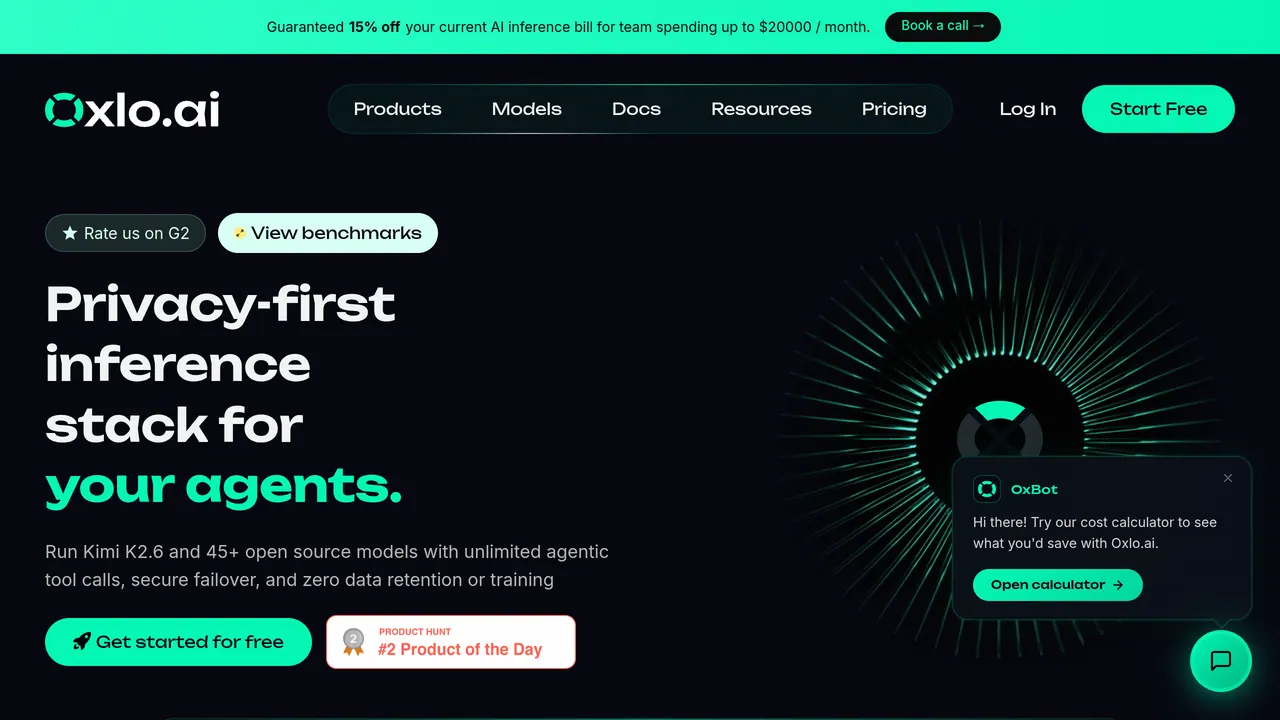
Oxlo.ai is a scale across AI models without scaling your bill Operates as a web-based platform accessible through a browser.
About Oxlo.ai
Oxlo AI is a web-based coding-agent platform that routes AI coding work across multiple models to cut the cost per task.
Its edge is model routing: instead of pinning you to one provider, it spreads workloads across several models to reduce spend, which is the point behind its "scale across AI models without scaling your bill" pitch.
It runs entirely in the browser, so there are no documented native IDE extensions — a limit if your workflow lives in an editor. The pricing tier isn't publicly listed either, which makes it hard to compare costs before signing up.
Among AI coding agents, Oxlo AI competes less on a single model's output and more on cross-model cost control, unlike tools tied to one provider or a specific IDE plugin.
Sources: this listing
Oxlo.ai pros and cons
Pros
- Operates as a web-based platform accessible through a browser.
- Routes AI coding workloads across multiple models to reduce cost per task.
Tagged
- Web-based
Oxlo.ai alternatives
More from AI Coding Agents.
- 01→Human Behavior
Product analytics told you what happened. We handle it.
- 02→Ito
AI code review that runs your code
- 03→Kane CLI
Natural language browser & mobile app tests from terminal
- 04→LaraCopilot
Agentic AI Engineer that builds real apps
- 05→Unsloth Desktop
Run and train AI models locally on your desktop
- 06→bb
The IDE that builds itself
Related reading
Featured on Vibedonalds
Own Oxlo.ai? Add this badge to your site to show you’re listed — and link back to your profile here.

<a href="https://vibedonalds.com/tools/oxlo-ai" target="_blank" rel="noopener">
  <img src="https://vibedonalds.com/badge/featured-on-vibedonalds.svg" alt="Oxlo.ai — Featured on Vibedonalds" width="240" height="60" loading="lazy" />
</a>Frequently asked questions
- What is Oxlo.ai?
- Oxlo.ai is a scale across AI models without scaling your bill
- What are the alternatives to Oxlo.ai?
- Similar tools in AI Coding Agents on vibedonalds: Human Behavior, Ito, Kane CLI, LaraCopilot.