How to Do Your Own SEO with Claude Code (When Your Site Is Brand New)
Claude Code can do most of your SEO — build a crawlable static site, write and optimize pages, fix the technical layer, even bottle the whole workflow into a reusable skill. What it can't do is invent authority or pick keywords, and if you let it generate 10,000 pages you'll get de-indexed, not ranked. Here's the honest, hands-on version for a maker whose site shipped last week.
One operator, Jono Catliff, says he drove about 50,000 clicks a month and half a million dollars in revenue with two Claude-Code SEO plays — his self-reported numbers, not ours and not a promise. The workflow behind them is real and worth stealing. But most guides teaching it assume you already have a domain with authority and a Search Console full of data. You don't. This is the same workflow, told straight for a site with no traffic and no history: what to automate, what to never let Claude do, and what actually moves the needle in month one.
Can Claude Code actually do your SEO?
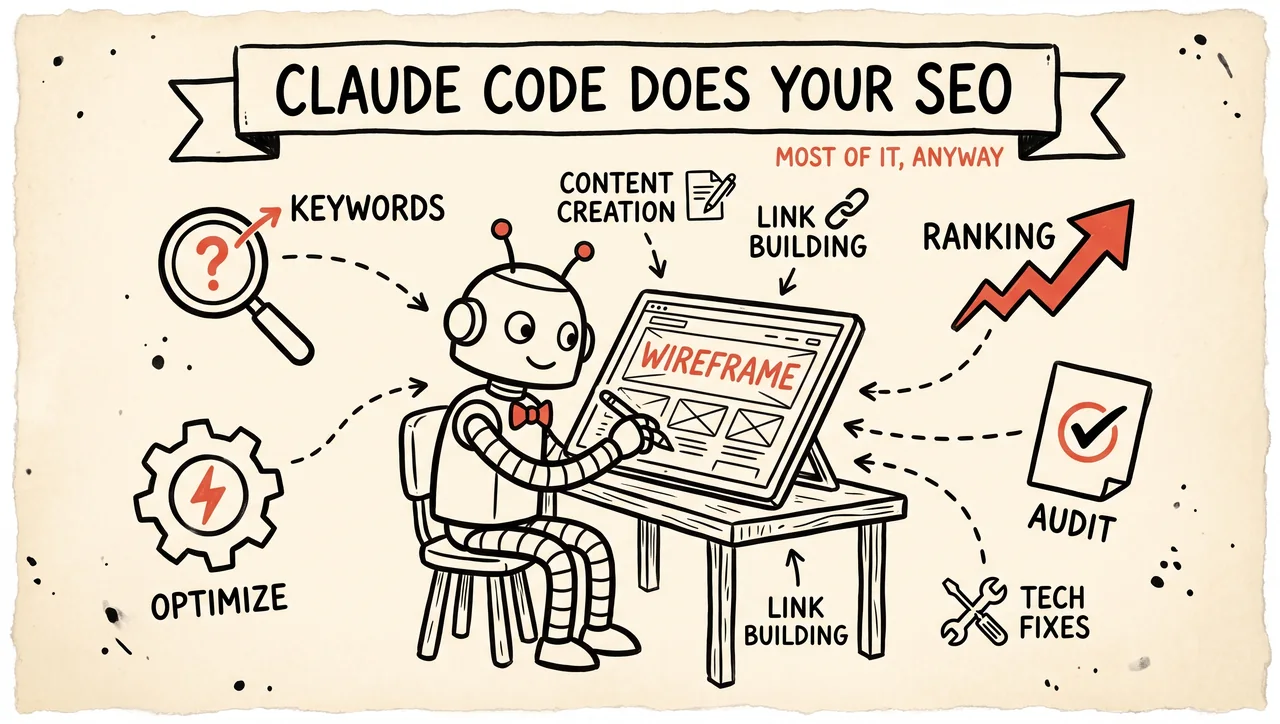
Yes — most of it. Claude Code can stand up a crawlable static site, write and optimize the pages, fix the technical layer (sitemap, robots, schema, Core Web Vitals), wire your internal links, and bottle the whole pipeline into a one-command skill. The parts it can't do are the parts that matter most for a new site: on its own it can't reliably pick keywords — without a connected tool it has no real search-volume or difficulty data — and it can't manufacture the authority Google trusts. Treat it as a tireless SEO contractor, not an oracle.
The workflow is genuinely powerful, which is why it's worth learning properly. The honest version below is tuned for a site that shipped last week — no traffic, no Search Console history, and the very real risk of doing more harm than good if you point all that horsepower in the wrong direction.
What can Claude Code do — and what can't it?
Before you point it at anything, get the division of labor straight. The most common way makers waste a weekend is asking Claude to do the two things it's worst at — picking keywords and conjuring authority.
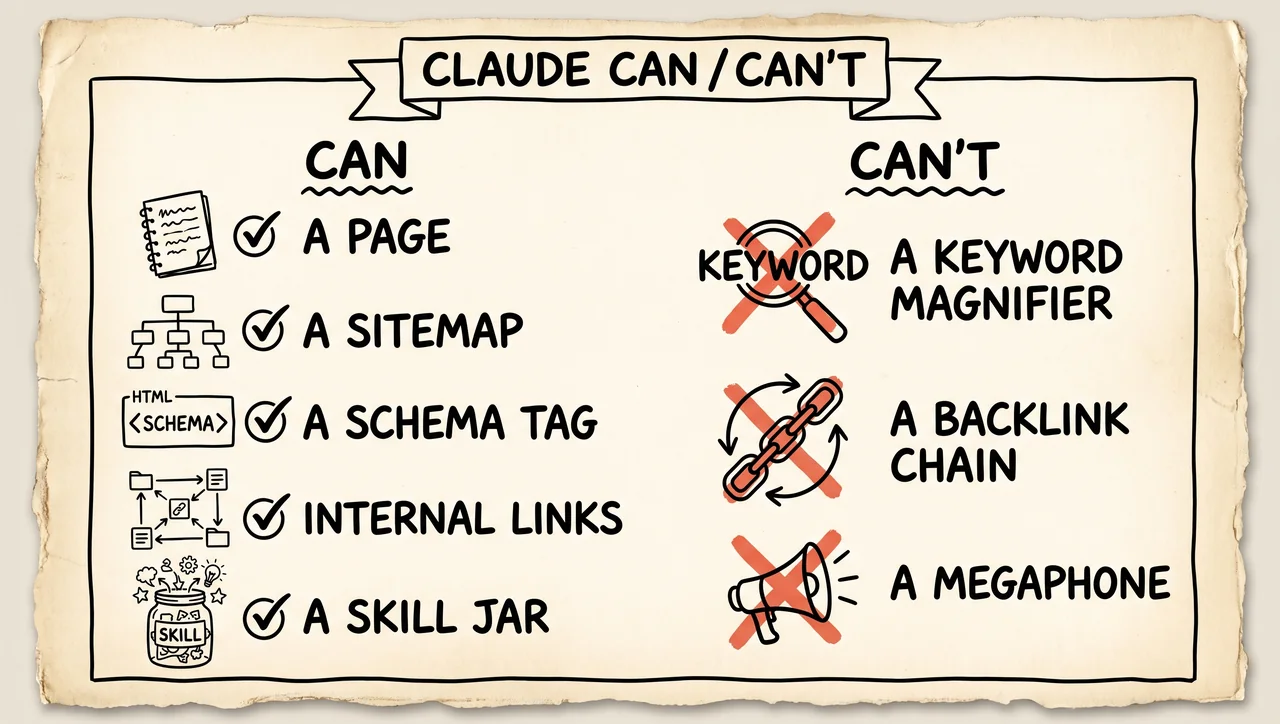
- 01CAN: build a static, crawlable site from a design reference in minutes.
- 02CAN: write, humanize, and on-page-optimize pages, and build keyword clusters from a list you give it.
- 03CAN: generate sitemap.xml, robots.txt, JSON-LD schema, and an llms.txt, and fix Core Web Vitals from a Lighthouse report.
- 04CAN: wire internal links across your repo and package the whole flow into a reusable skill.
- 05CAN'T: know real search volume or difficulty on its own — without a connected tool its guesses are unreliable. Use a keyword tool.
- 06CAN'T: create authority or backlinks. No prompt earns trust; that comes from real mentions, links, and time.
- 07CAN'T: replace distribution. A perfect, invisible site ranks for nothing.
What does SEO actually do for a brand-new site?
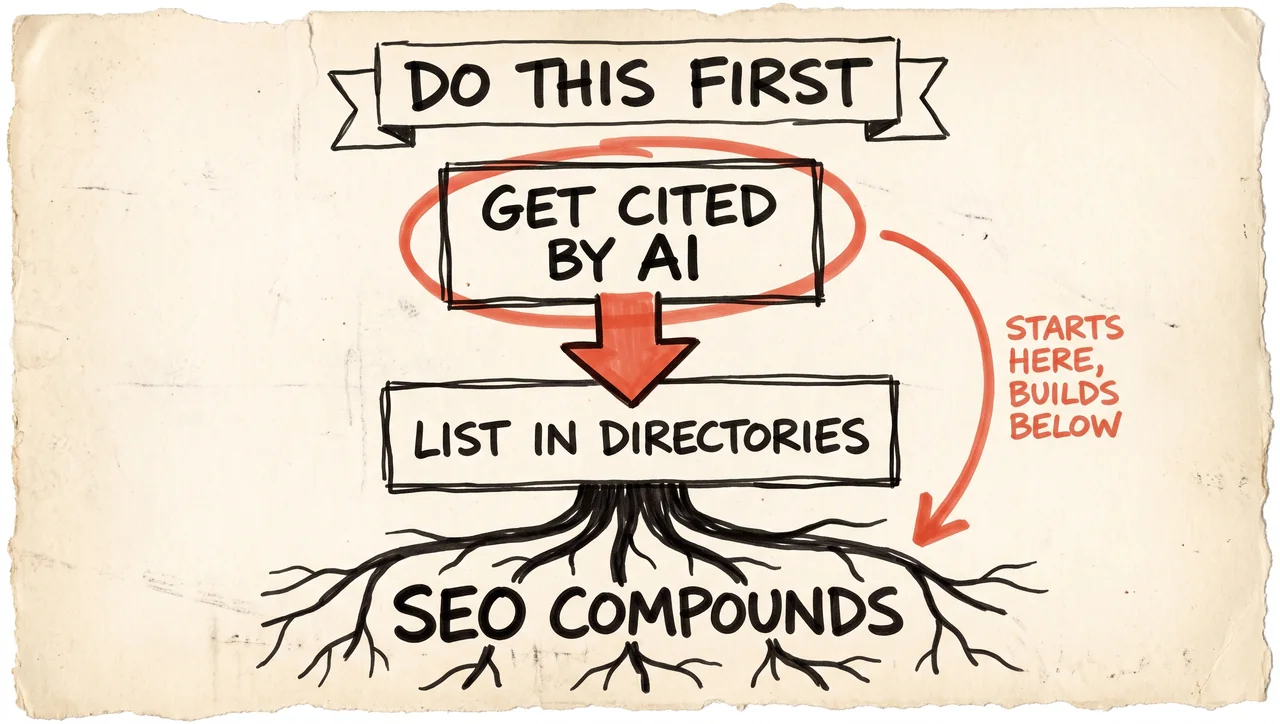
Here's the part the agency guides skip: for a domain with no authority and no history, SEO is a slow compounding game, not a month-one traffic source. You will not rank for competitive head terms in week one no matter how clean Claude makes your pages. So sequence it honestly — for a new product, getting cited by AI answer engines and listed where they crawl can land real users before any keyword ranks.
The reason is sequencing. For a brand-new product, a small amount of AI-referred and directory traffic can convert better than hard-won organic clicks, because the people who arrive that way already have intent. So the first job isn't ranking — it's being the answer an AI cites and a product a directory lists, while your SEO compounds underneath. We cover that off-site half in its own guides.
- How to Get Your AI App Cited by ChatGPT and Perplexity
The off-site half: how to become the source AI answer engines quote, even at zero authority.
- Where to List Your AI App
The directories and review sites AI engines crawl — distribution that lands users before you rank.
- How to Get Your First Users for a Vibe-Coded App
What to do in week one instead of waiting on Google.
The trap: should you let Claude Code generate 10,000 pages?
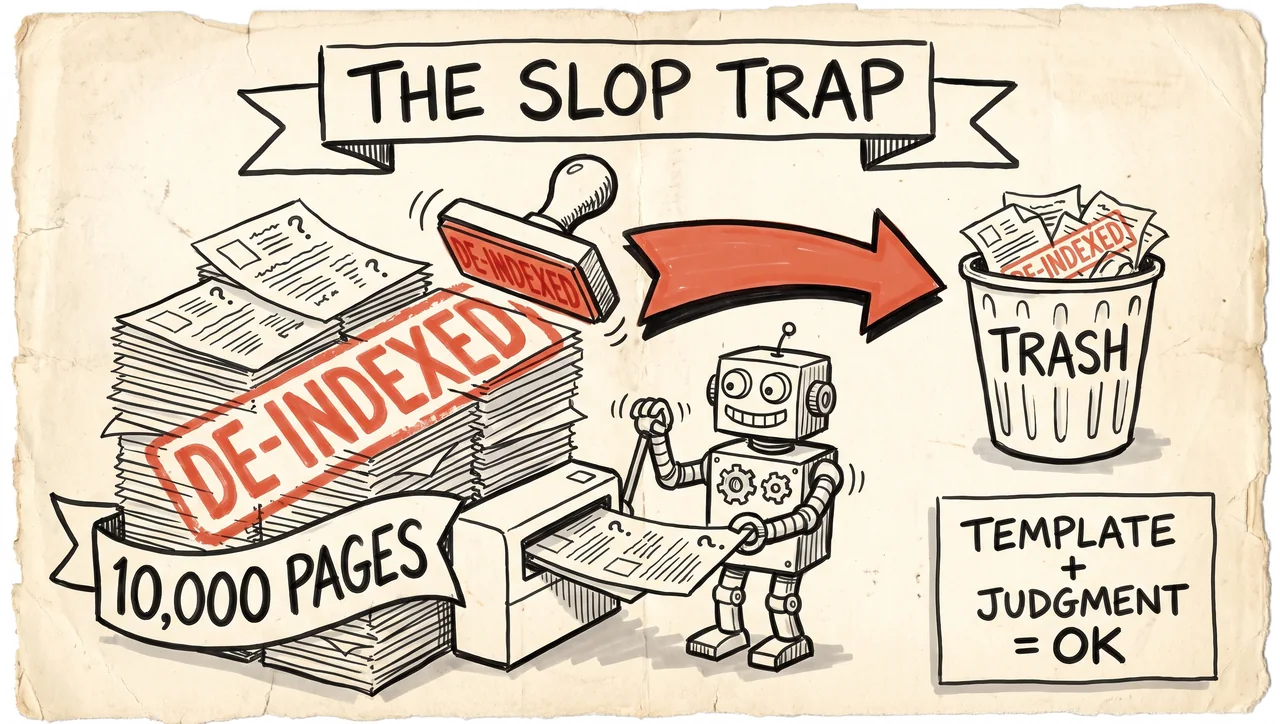
No — this is the fastest way to sink a new site. Claude Code will happily generate ten thousand pages; Google can leave them out of results entirely. Google ran a spam update from August 26 to September 22, 2025, and its spam policies separately define 'scaled content abuse' — and the key line is that Google judges why a page was made, not how. Mass-produced, templated, or AI-spun pages that add no unique value and get no human review are exactly the target — whether a person or a model wrote them (Google, 2025).
So draw the line yourself. 'Template plus real judgment on every page' — a genuine answer, your own data, a reason each page exists — survives. 'Swap the city name into the same paragraph five hundred times' does not. Ramp slowly, too: a big batch of thin pages all at once creates quality and crawl risk you don't need. A handful of genuinely useful pages beats a thousand thin ones, and on a new domain the thin ones can drag the whole site down with them.
How do you build a site Claude can actually rank?
Start with a site Google can read. Open Claude Code in your editor and give it a CLAUDE.md — a standing instruction file that works like an SOP for a new hire: your rules, your stack, and one non-negotiable, that the site is built with static generation.
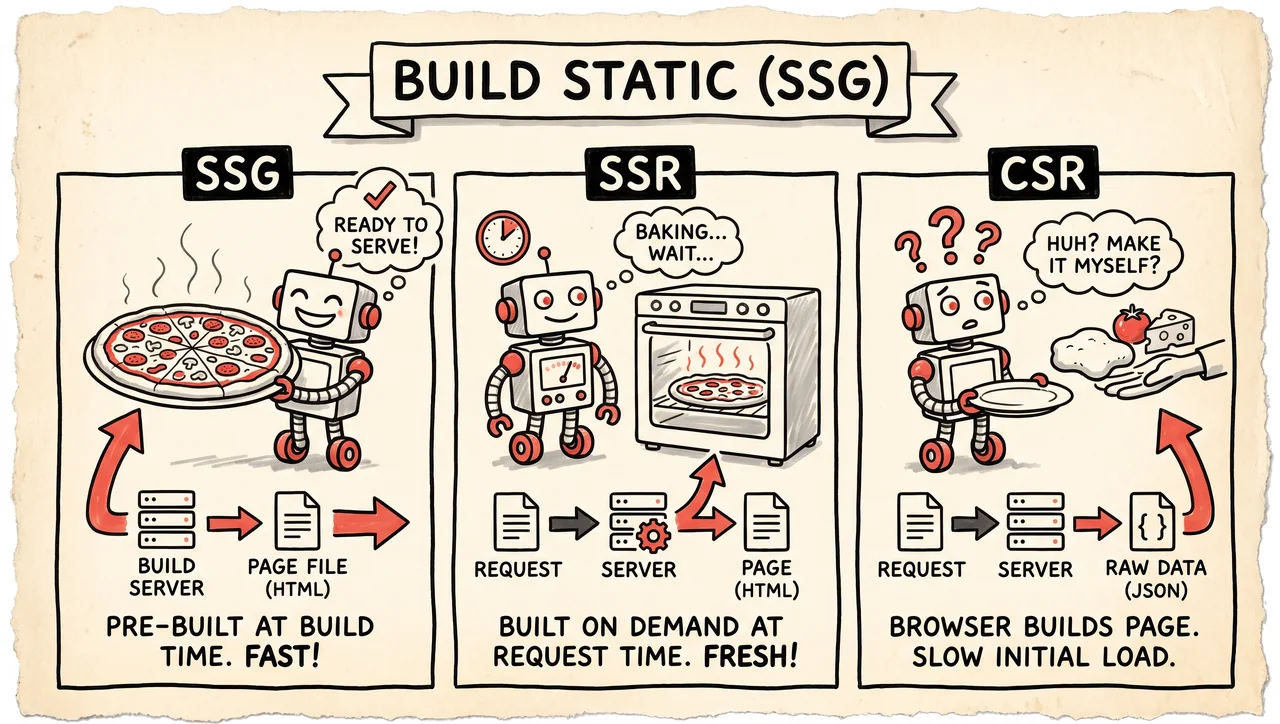
What matters most here is that a crawler gets your full content. Static generation (SSG) or pre-rendered HTML is the safest bet — the finished page is there on the first request. Server rendering can also work if it returns complete HTML; the risky one is pure client-side rendering, where the browser assembles the page with JavaScript and a crawler can get an empty shell. Google does render JavaScript, but not every crawler does and it adds delay — so prefer pre-rendered HTML for the pages you want to rank. Then, to get a design that doesn't scream 'AI template,' grab a screenshot of a site you like (Dribbble is full of them) and tell Claude to match it — a homepage, a blog index, and a service index to start.
Where do the keywords come from (hint: not Claude)?
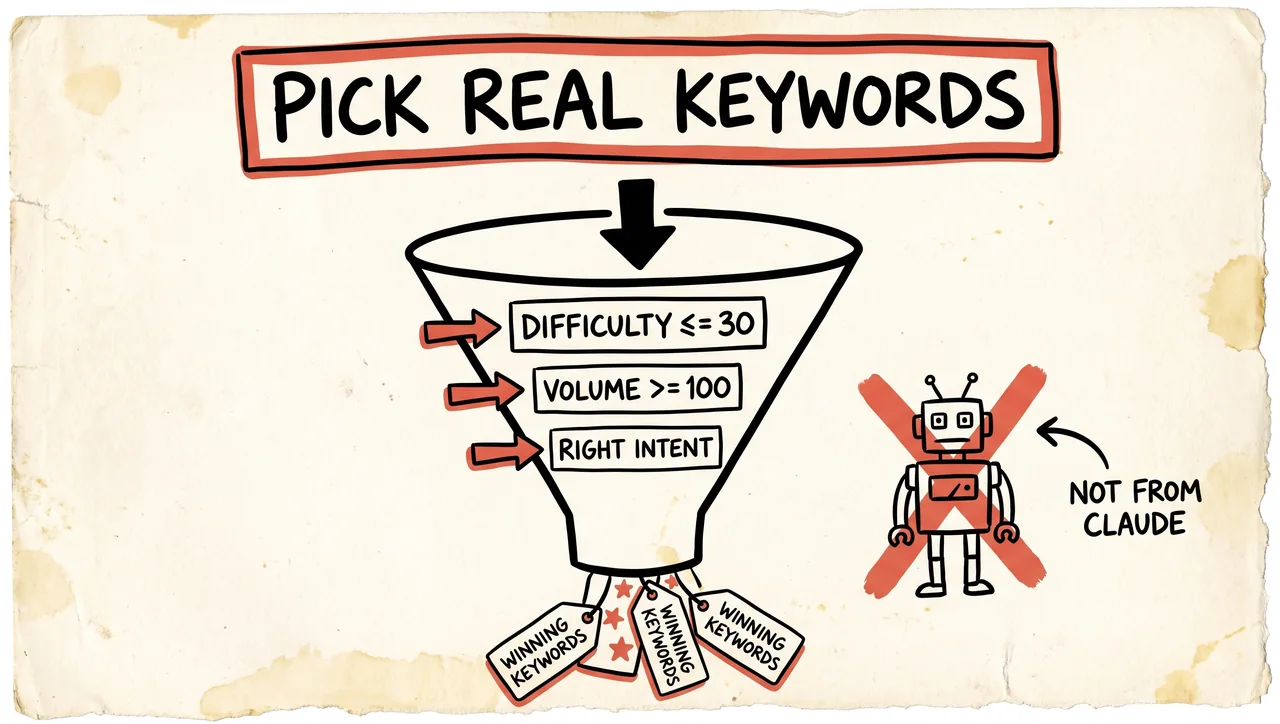
This is the step where makers go wrong: don't rely on Claude to pick keywords from thin air. Without a connected keyword tool or an exported list, it has no real volume or difficulty data, so its guesses are unreliable. Use a real keyword tool (Ahrefs, Semrush, or similar) and filter hard — difficulty low enough that a new site has a shot, volume high enough to be worth it, and the right intent. Informational queries ('how much does X cost') want an article; commercial queries ('X in [city]') want a service or product page. Match the page type to the intent, or you'll rank for the wrong thing.
Then think in clusters, not single keywords. One well-built page can answer a root term and dozens of related ones, so it ranks for many queries at once. Export your chosen keywords to a file, hand it to Claude Code, and let it turn each into a targeted page — now it's working from real data instead of guessing.
How do you write pages that don't read like AI?
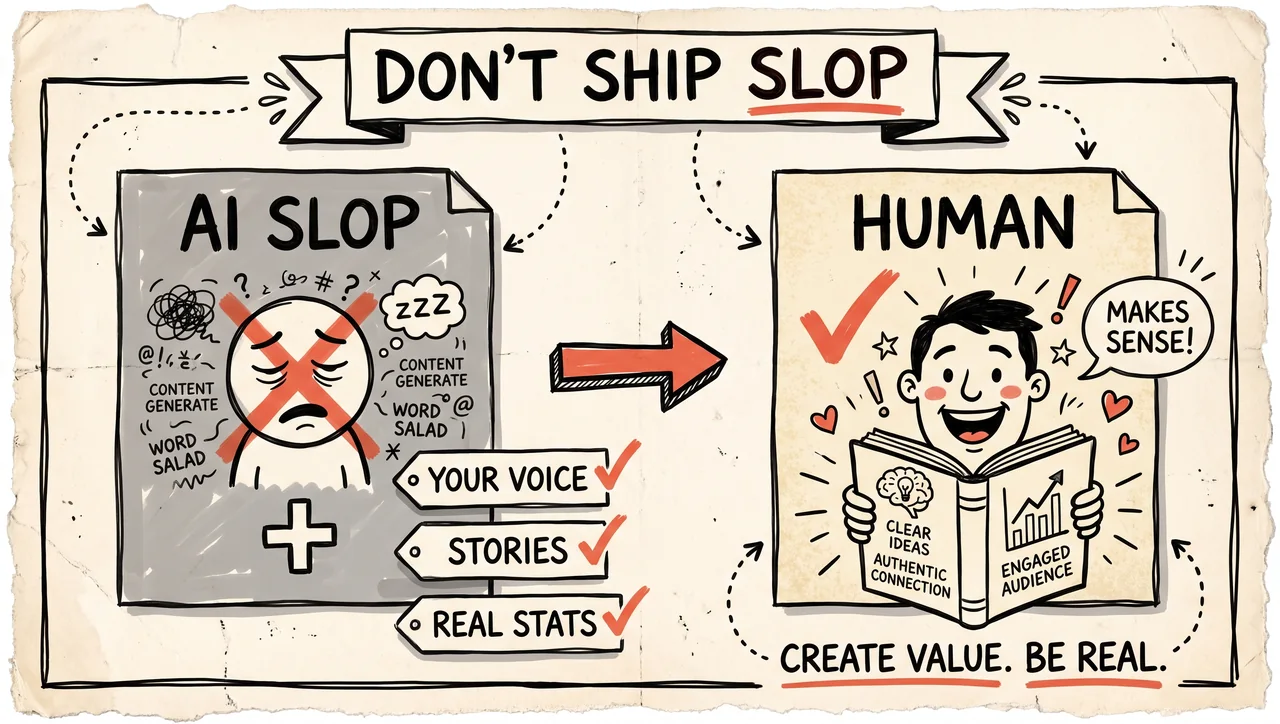
Raw model output is the fastest way to lose readers — and a page people leave fast is usually a weaker, less useful page. The fix is to give Claude your raw material: your real voice, your stories, your opinions, your actual numbers. Point it at things you've already written (posts, transcripts, notes), have it learn the style, then write in it. The goal is a page that sounds like a person who knows the topic, not a generic explainer.
Then borrow from what already wins. Since no one outside Google knows the exact algorithm, the top results are your best read on what searchers expect: have Claude study the top few ranking pages for your keyword, then write something more useful than any of them — not a summary of them. Finish with the on-page basics (the keyword in the title, H1, and opening; a few internal links to your own pages and a couple of external ones to good sources; a real meta title and description; alt text on images) — but don't let the checklist sand the personality back off. Content people actually read is the whole point.
What's the maker's edge? Point Claude Code at your own repo.
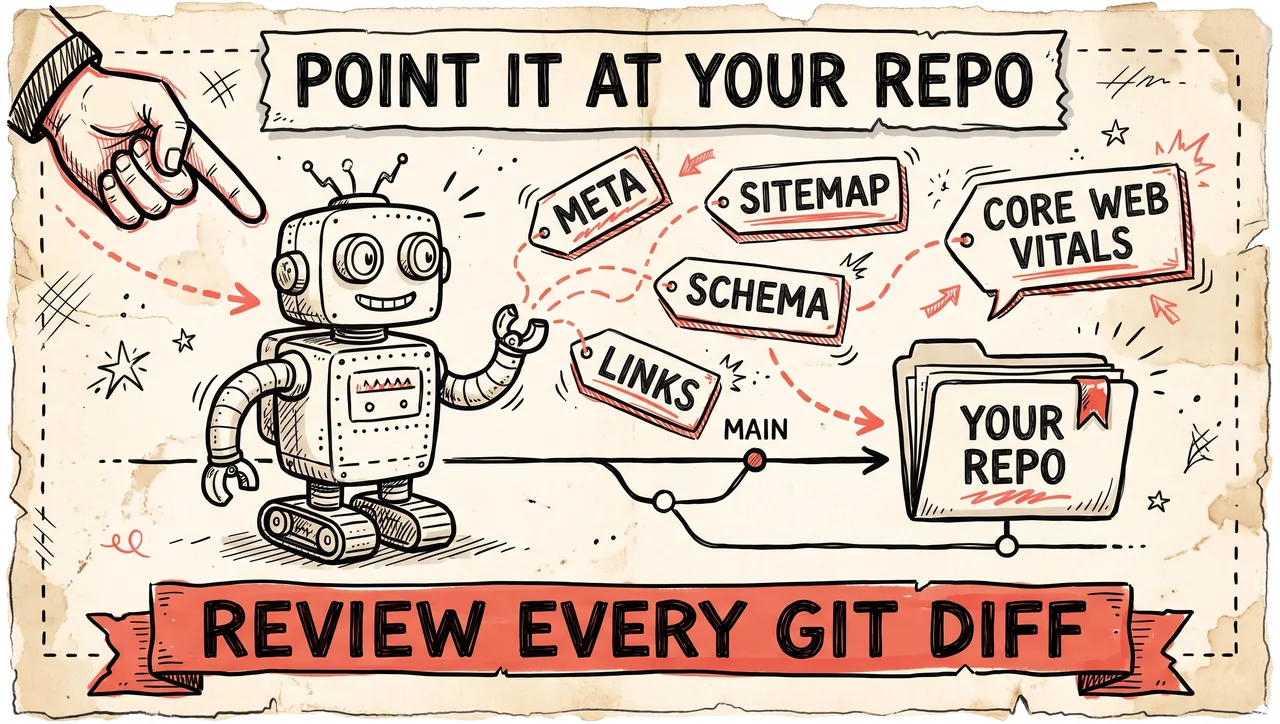
Here's the move the other guides miss, and it's the best one for you: you already shipped your product with Claude Code. Point it at that same repo. On a fresh git branch, ask it to fix your meta titles and descriptions, generate or repair your sitemap.xml and robots.txt, add JSON-LD schema, optionally add an llms.txt for AI crawlers, tighten your internal links, and clean up Core Web Vitals from a Lighthouse report. This repetitive, across-the-codebase work is exactly what Claude Code is best at — and far more valuable on a real product than spinning up throwaway pages.
While you're there, do the one technical job that pays off fastest for a new site: make your important pages answer-first and extractable — a direct answer up top, question-shaped headings, real facts in clean formats, plus FAQ and schema — so they're easy to understand and eligible to show up as supporting links in AI and search features. That's the do-it-yourself complement to getting cited. One safety rail above all: review every change with git diff before you merge. Let Claude do the work; you stay the editor.
Can you bottle the whole thing into a reusable skill?
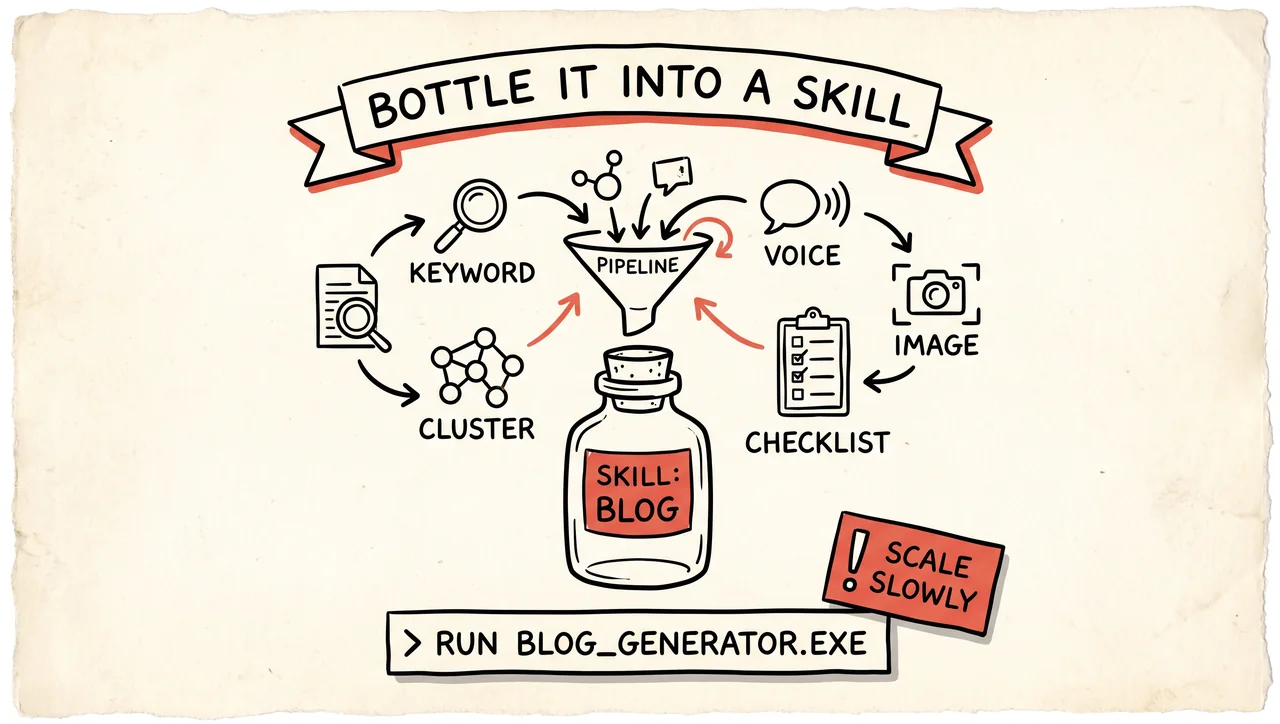
Yes — and this is where it compounds. Once your blog-post and service-page flows work, package each as a Claude Code skill: a reusable, named workflow (Anthropic shipped Agent Skills in October 2025 and made the format an open standard that December). Then one command runs the whole pipeline — read the keyword, build the cluster, write in your voice, apply the on-page checklist, drop in images. You can also connect data sources to Claude Code over MCP, so it works from your real analytics instead of guesses.
Power cuts both ways, though. A skill that can spin up a hundred pages is a skill that can spin up a hundred ways to get penalized. Keep human judgment in the loop, keep the ramp slow, and keep each page worth its own URL.
You shipped it — now what?
Deploying is free: push the repo to GitHub, connect it to Vercel, and it's live (set the framework preset correctly or the build breaks). Then work the unglamorous launch checklist — the part that helps Google discover and process your pages.
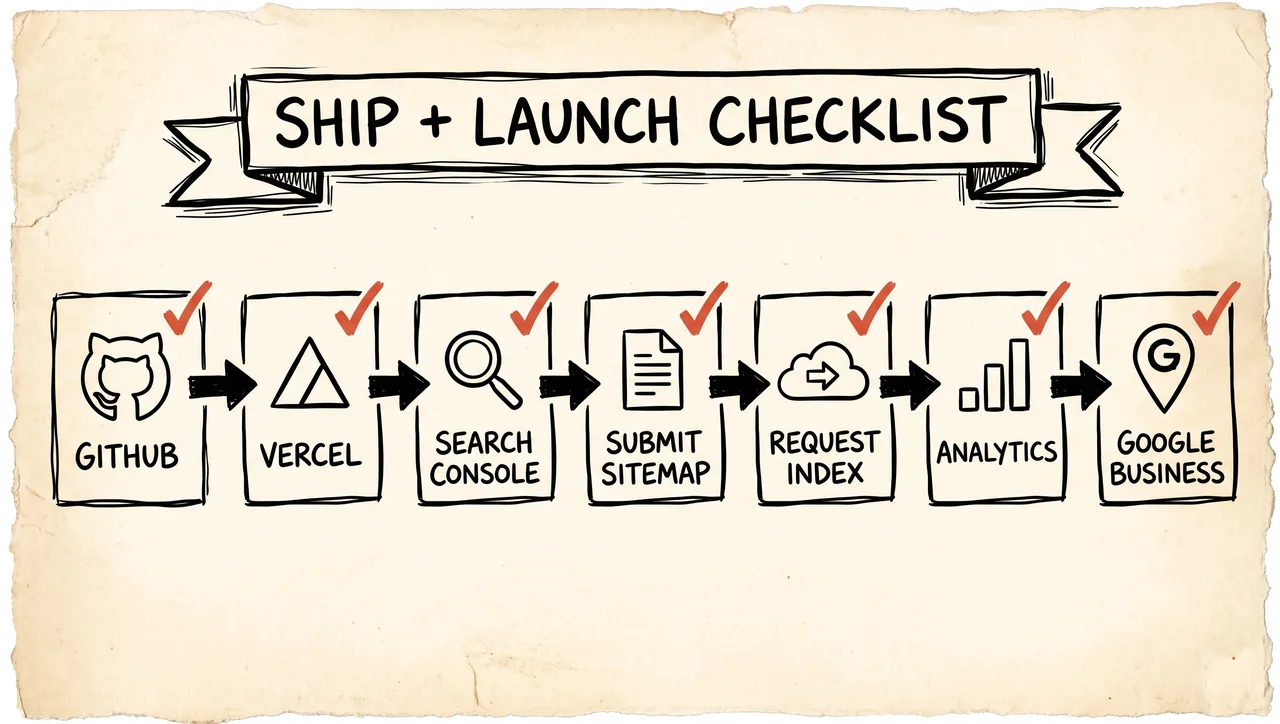
- 01Push to GitHub, deploy on Vercel (free) — set the framework preset right.
- 02Google Search Console: verify the site, submit sitemap.xml, and request indexing for your key pages (it's a request with a quota, not a guarantee).
- 03Add analytics so you can read early behavior.
- 04If you're a local business, claim and verify a Google Business Profile so you appear on Search and Maps.
How long until any of this works?
Set honest expectations. For the first weeks your Search Console will likely look nearly empty — that's normal for a new site. Long-tail 'how to X' queries tend to move first; head terms take months and authority you don't have yet. Don't read an empty dashboard as failure; read it as a new domain doing what new domains do.
Measure what's actually happening. Watch impressions creep up in Search Console for your long-tail pages, and check AI citation the simplest way there is: ask ChatGPT, Perplexity, and Google's AI mode your target questions and see whether you're named. That list — who gets cited for your queries — is your real competitive set, and it usually moves before the rankings do.
Frequently asked questions
- Can Claude Code do SEO?
- Yes, most of the hands-on work: it builds a crawlable static site, writes and optimizes pages, fixes technical SEO (sitemap, robots, schema, Core Web Vitals), wires internal links, and can package the workflow into a reusable skill. It can't pick keywords (no real volume or difficulty data) or create authority, so pair it with a keyword tool and real distribution.
- Will Google penalize AI-generated SEO pages?
- Not for being AI-written, but for being scaled, thin, and value-free. Google's spam policies target 'scaled content abuse' and judge why a page exists, not how it was made. Pages with genuine value and human review are fine; mass templated slop risks ranking lower or not appearing at all. Ramp slowly and make every page worth its URL.
- How do I do SEO for a brand-new site with no authority?
- Sequence it: AI citation and directory listings can bring users before keywords rank, so do those first while your on-site SEO compounds. Use Claude Code to make your pages crawlable, answer-first, and technically clean; target low-difficulty long-tail keywords; and expect months, not days, for anything competitive.
- Should I do SEO or just launch on directories first?
- Do both, but lead with distribution. For a no-authority product, a launch and a few crawled directory listings can land real users faster than ranking will — and they build the early mentions that help you get cited and, eventually, ranked. SEO is the compounding layer underneath, not the week-one play.
- How long until a new site ranks on Google?
- Realistically months for anything competitive; low-difficulty long-tail queries can move sooner. A new domain has no authority, so set expectations accordingly: watch impressions in Search Console, win the easy long-tail first, and measure AI citations in parallel by asking the engines directly.